
Marketer, analyst, ex-CMO focused on the Google ecosystem (Ads, Merchant Center, GA4, GTM). Google Partner. 150+ projects, 100+ positive reviews on Freelancehunt, 12+ countries.
- I work directly, with no account managers or subcontractors
- I measure results in sales, not in-platform conversions
- Maximum expertise in the Google ecosystem — instead of “PPC, social ads and SEO, all in one”
A private clinic with several medical specialties came to me for an audit. The ads were running, the budget was being spent, but the owner felt there were far fewer bookings than the account showed. After the audit the client moved to me for ongoing management, and we’ve been working together for more than three months now.
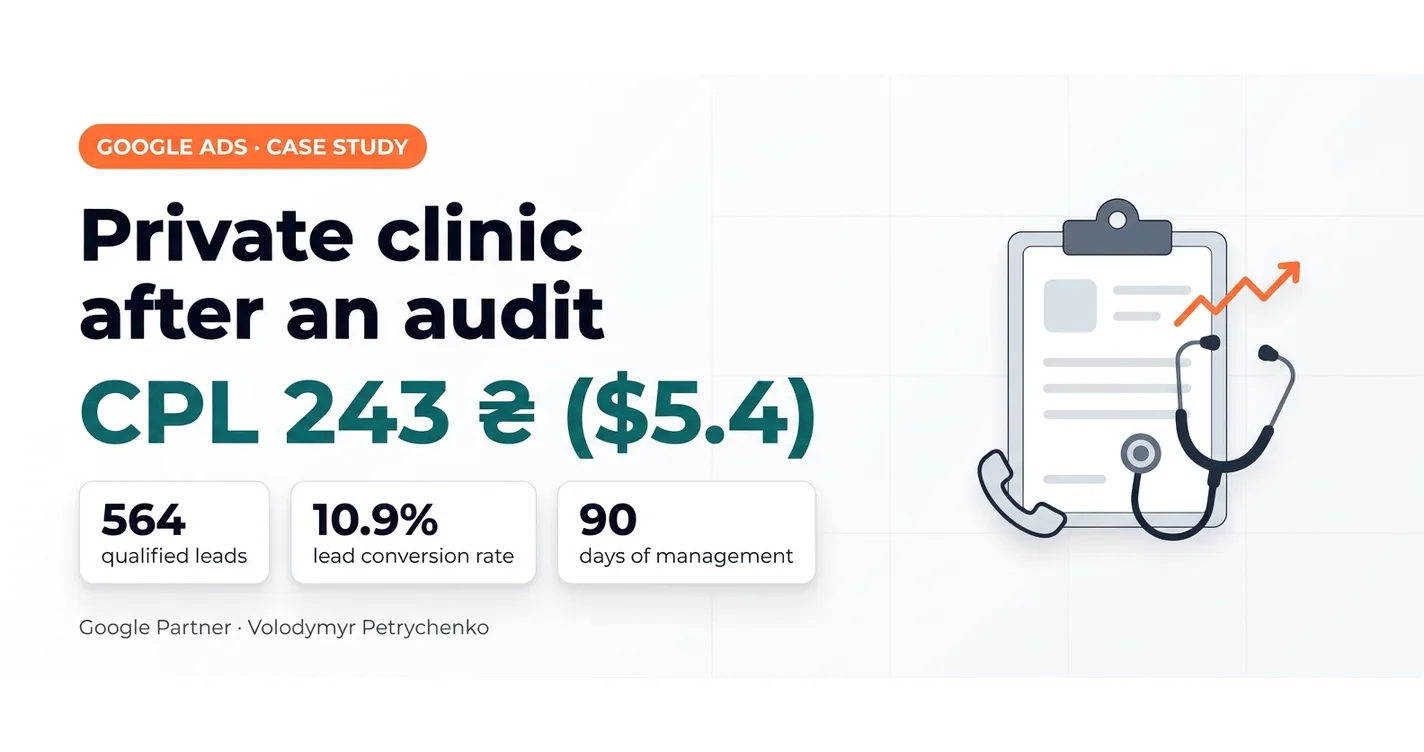
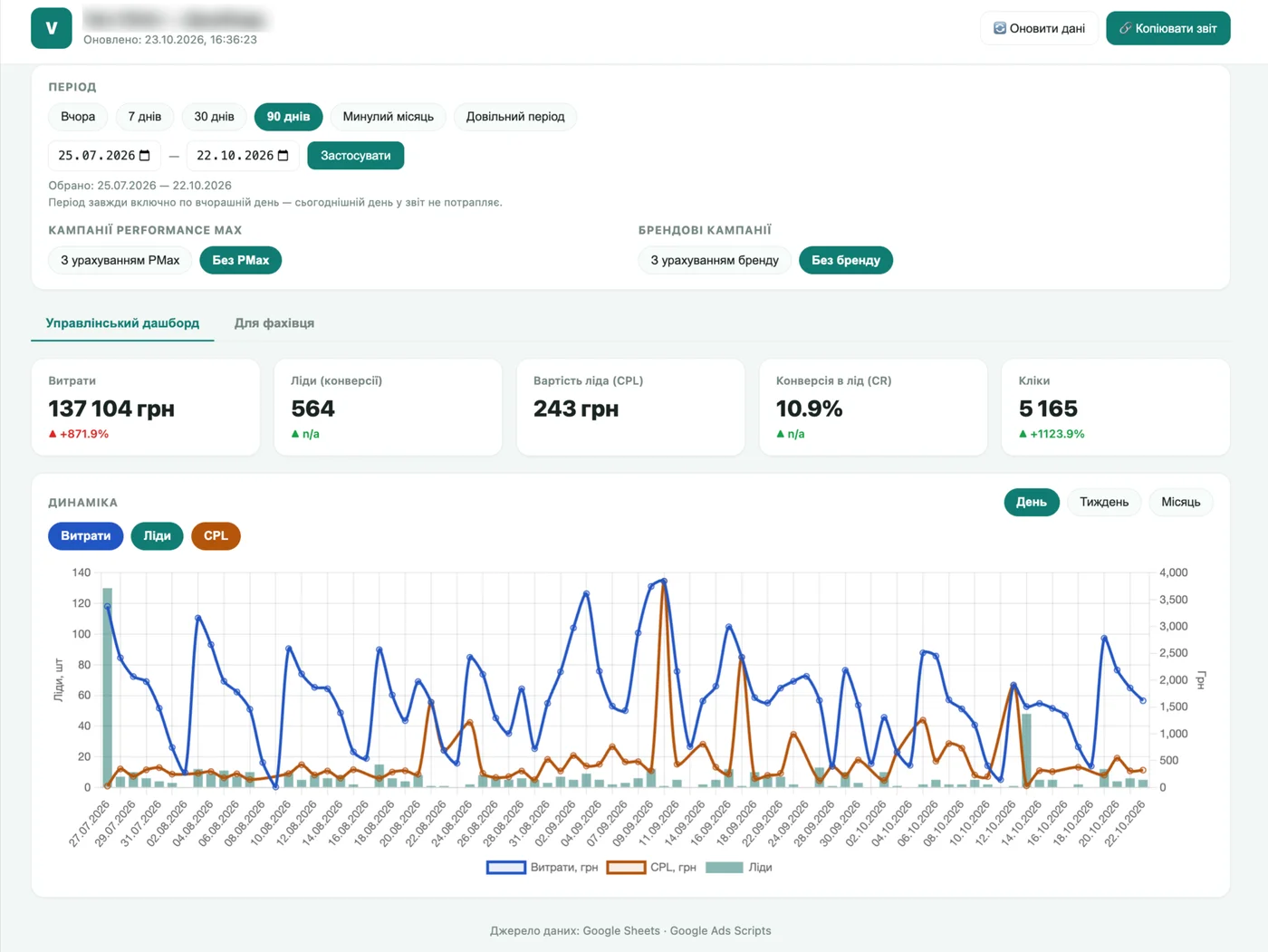
Over the last 90 days, from July 25 to October 22, 2026, non-brand Search campaigns brought 564 qualified leads at 243 UAH with a 10.9% click-to-lead conversion rate. “Qualified” is literal here: this number includes only enquiries that the clinic’s admins marked as relevant.
Contents
What I found in the audit
I didn’t dig deep into the campaigns themselves back then. When there are basic-level mistakes, there’s no point reviewing ads and keywords.
Google Ads Audit — Private Clinic 2026

The main problem was conversions. The account had one goal: a call from Binotel call tracking. And it counted every single call. Someone didn’t get through and called again — two conversions. Three days later they called to reschedule — one more. Questions like “where are you located” and calls from a bank offering a loan went in here too. The ads were learning from duplicates, and the cost per lead in the account said little about reality.
The appointment booking form wasn’t tracked at all. Yet on mobile there’s a separate, prominent button for it, so people definitely use it. Google Ads knew nothing about those requests.
The other points:
- There was no brand campaign; brand queries ran together with generic ones. And the clinic has over 400 reviews on Google Maps with a 4.7 rating, so people search for it by name. Brand brings cheap leads and hides the real cost per lead: a notional 200 UAH in the report could turn out to be 1,000 or 2,000 UAH without brand. On top of that, with Target CPA the system itself pulls towards brand queries, and there won’t be more of them no matter how hard the ads look. Why brand and non-brand have to be counted separately, I also covered in the audit of a pizzeria in Kraków.
- Target CPA was set to a value nobody had touched, possibly since launch. Demand and click prices change, the target didn’t.
- The Google Maps listing wasn’t linked to the account. So the ads showed no rating or distance to the clinic, and there were no ads on Maps at all. For a clinic this matters: someone who needs an abdominal ultrasound will, all else being equal, pick the one 500 metres away.
- In practice nobody was managing the ads. In 30 days the change history had one edit: an accepted Google recommendation to add a sitelink. In two months — a few minor changes across all campaigns.
As a solution I proposed passing only qualified enquiries to Google Ads: ideally via a CRM integration, at minimum counting at least unique calls. How to count unique enquiries with Google Tag Manager, I showed in the breakdown of $750-a-month tracking. Structurally the core is Search, with Performance Max at up to 20% of the budget and only with regular work on it.
Qualified enquiries only
The first task when management started was switching to qualified enquiries. The client handed it to the admins, and they began marking relevant calls in Binotel. Once a call is marked, Binotel sends a separate event to GA4, from there it goes to Google Ads, and the campaigns optimize for exactly that.
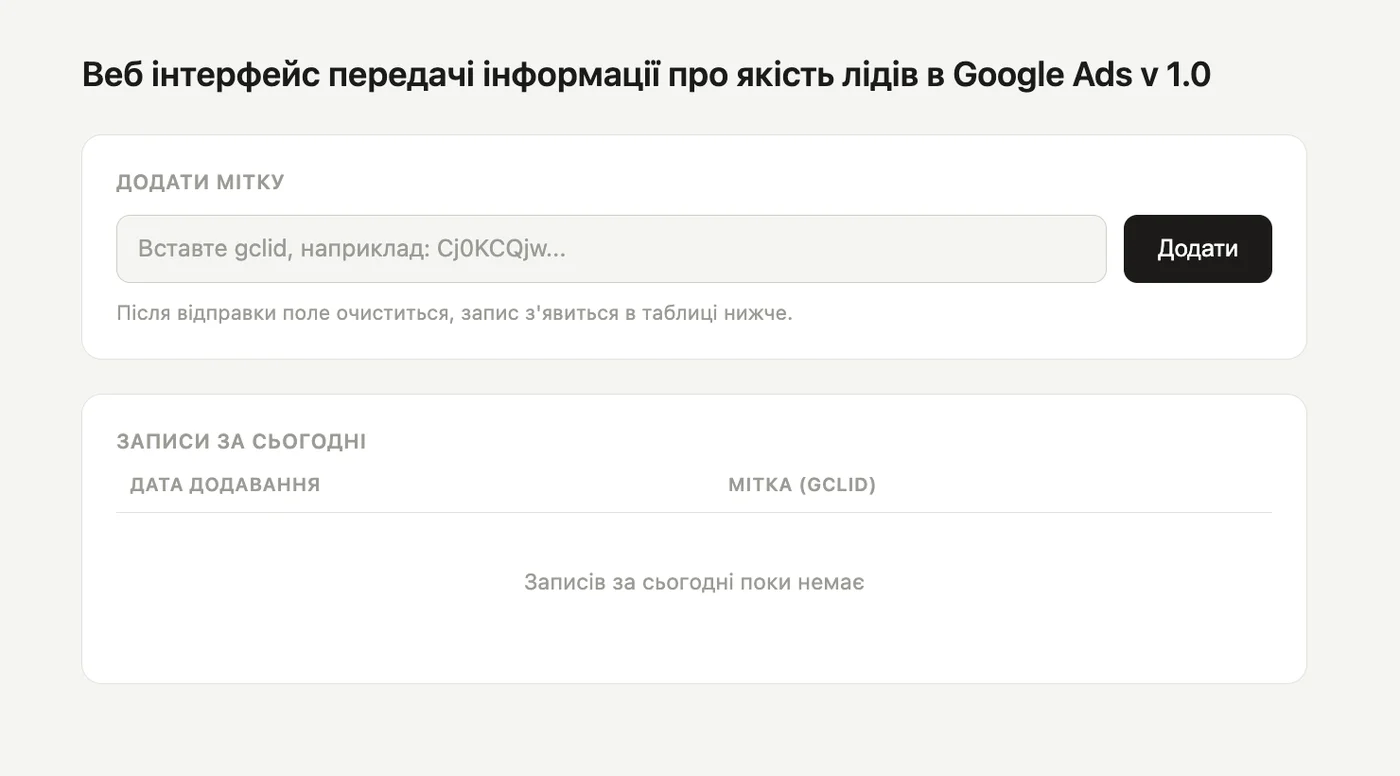
The clinic has no CRM, so forms work differently. An admin pastes the gclid of a qualified request into a simple web interface, and once a day these leads reach Google Ads as the offline conversion “Qualified lead (Form)”.
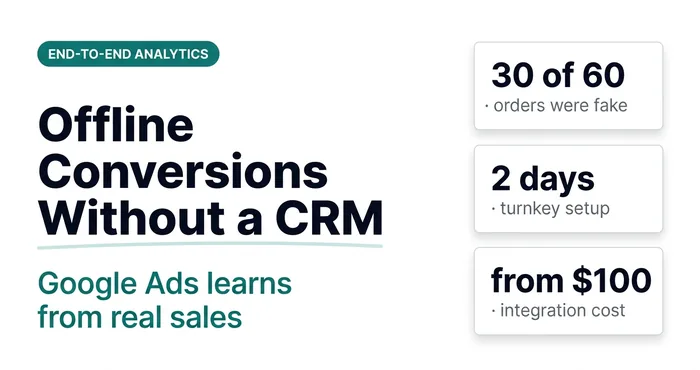 Google Ads case study · End-to-end analyticsGoogle Ads Offline Conversions Without a CRM: Ctrl+C, Ctrl+V — and Your Ads Learn from Real SalesHow to send qualified leads, real sales and margin to Google Ads without a CRM: a simple web interface, gclid and a daily upload. Two options, price, timing.
Leads lost at reception
After a while my maths stopped adding up. The queries were relevant, the ads were fine, but there were suspiciously few marked leads. It turned out the admins only marked answered calls. Nobody marked missed ones, although a person who couldn’t get through to book doesn’t stop being a lead. I wrote up separately how I found this.
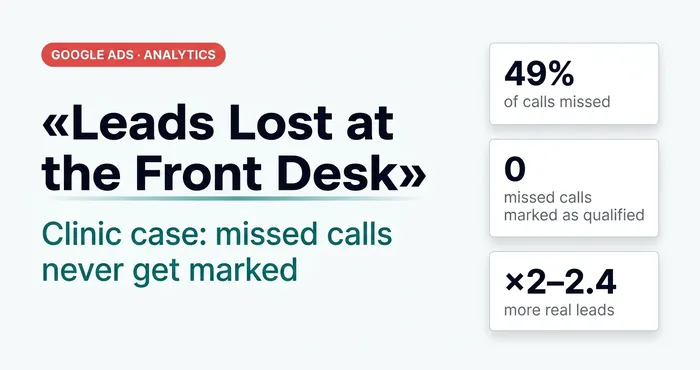 Analytics · Google AdsThree Months Treating the Ads. The Front Desk Was SickA clinic marks qualified calls in Binotel, but never the missed ones. Why Google Ads sees only half the leads — and why the problem isn’t the ads.
After that the missed calls were marked, so far for one month only. Even so the difference is visible. Across all campaigns for July 21 to October 18, before marking there were 497 leads at 336 UAH, after — 592 leads at 282 UAH. Same budget and campaigns, plus 95 leads that were simply getting lost along the way.
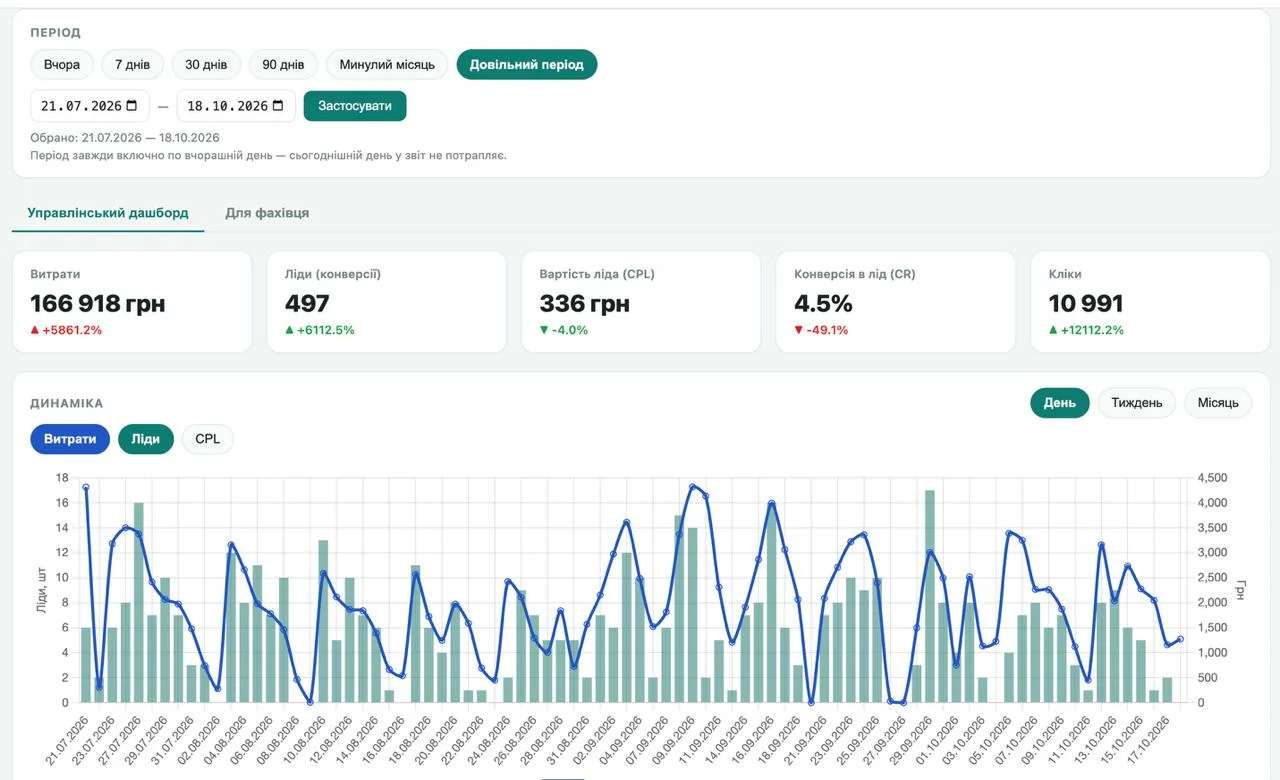
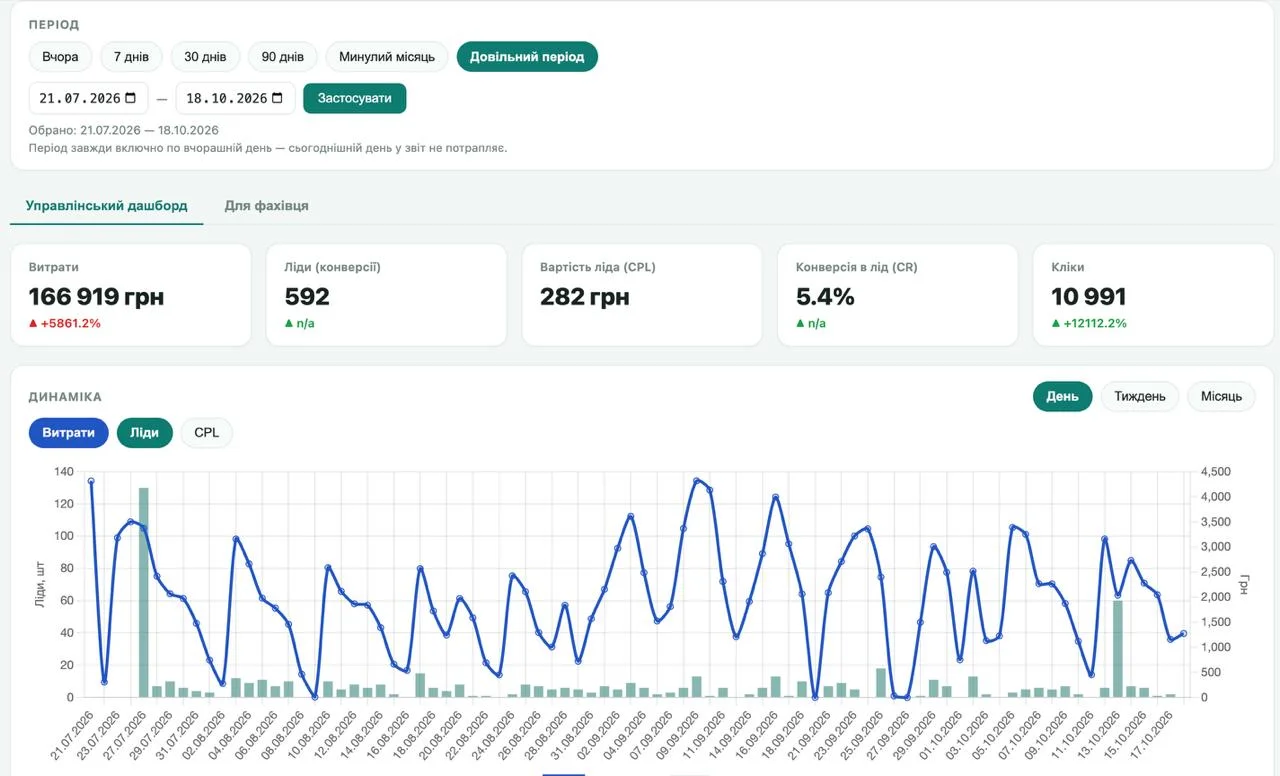
We’ve been working together for more than three months, and only one has been marked, so the real cost per lead is even lower than in the screenshots.
A dashboard without self-deception
I built end-to-end analytics for the client and added two toggles without which lead gen numbers lie.
The first is Performance Max. With it the click-to-lead conversion rate is 5.4%, without it 10.9%. Performance Max brings lots of cheap traffic from placements where there are almost no requests, and blurs the whole picture. Over these 90 days it accounted for about 22.8K UAH, 5.8K clicks and 28 leads, roughly 815 UAH per lead. That’s why I look at it separately.
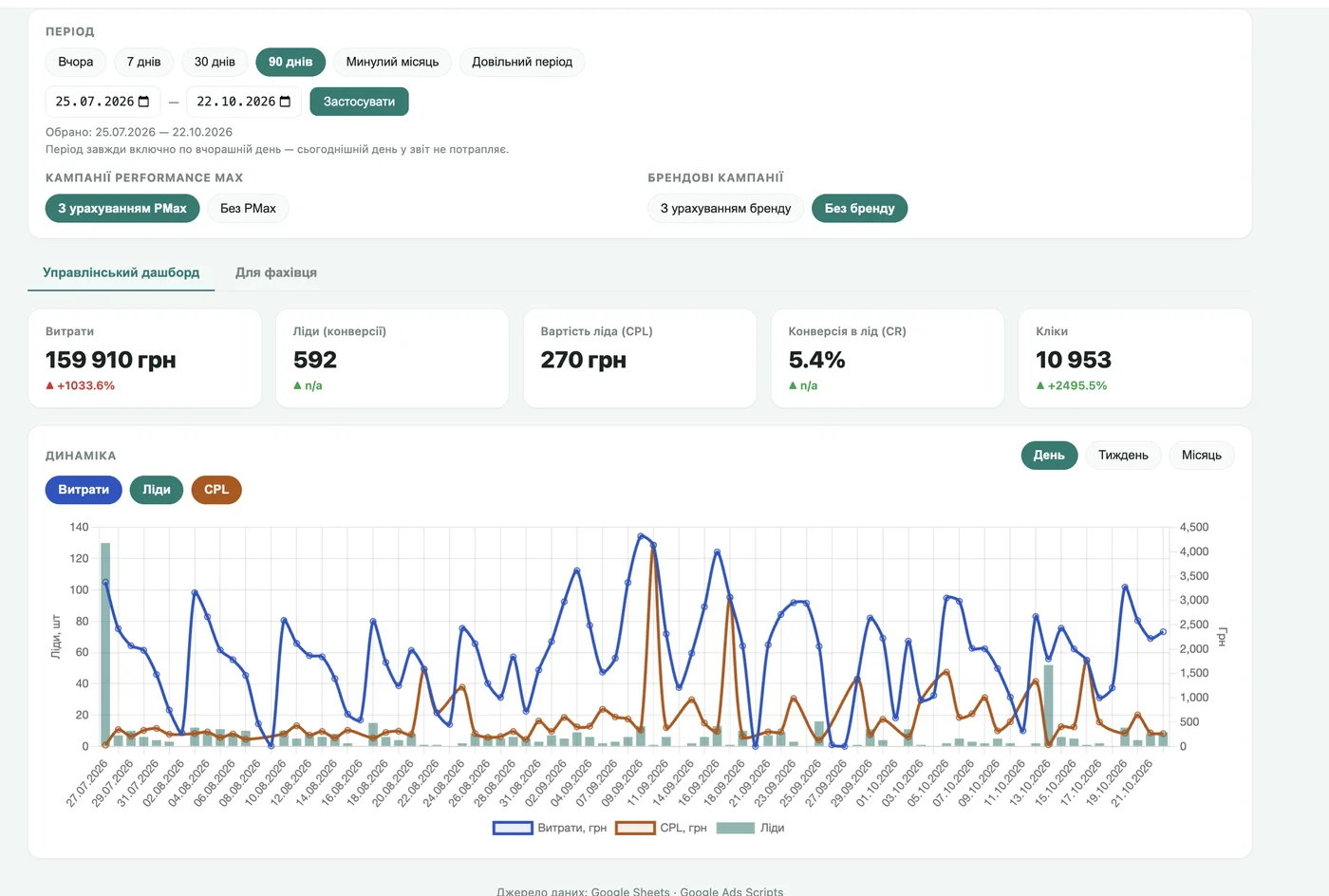
The second is brand. Brand campaigns always improve the numbers, because people there are already looking for this exact clinic. So all the figures in this case are non-brand.
Specialties convert differently
On the specialist tab each specialty is shown separately: spend, clicks, leads, cost per lead and conversion rate. Full unit economics that both I and the client understand.
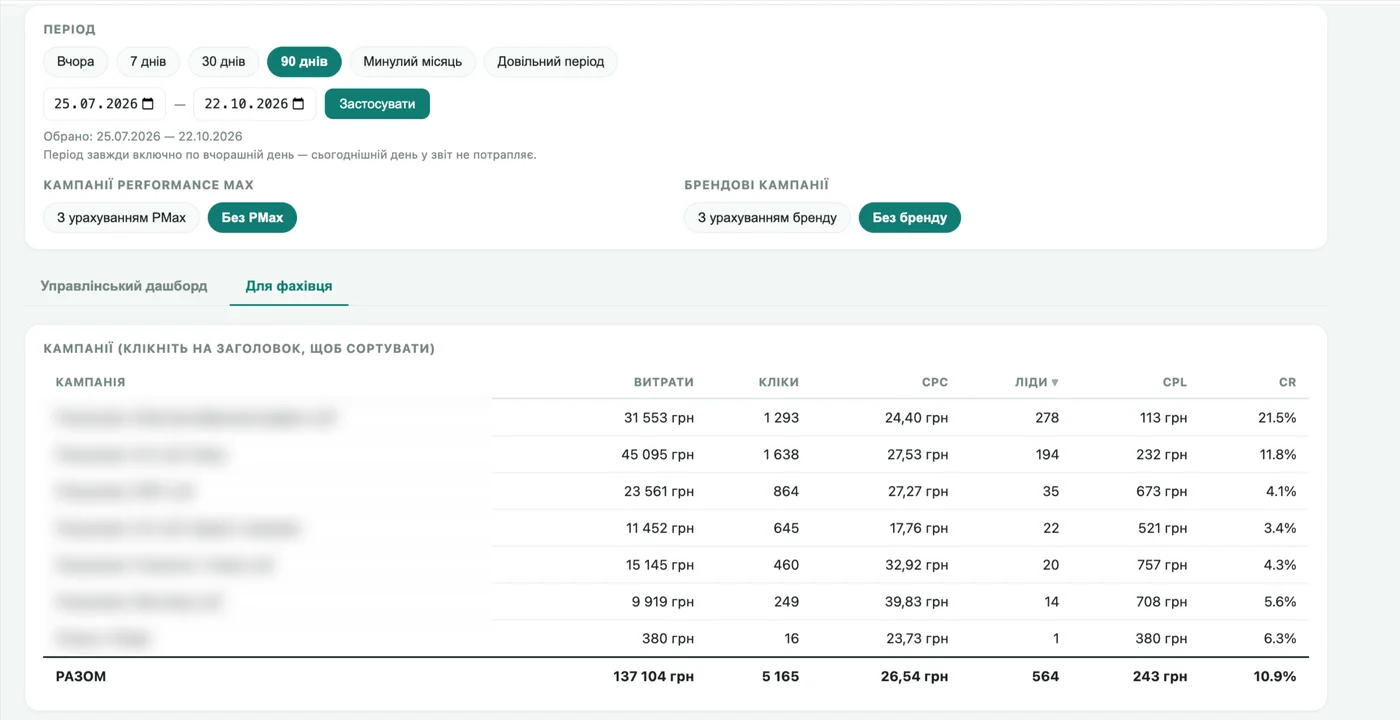
The spread is wide. The best specialty brings almost half of all leads, 278, at 113 UAH with a 21.5% conversion rate. The three most expensive come in at 670–760 UAH with 4–6% conversion.
One of the expensive ones is ENT. I looked into why, and the reason is mundane: a general specialist, very high competition, and the clinic has no particular edge here. It’s a different story when you have equipment that, say, five clinics out of a hundred in the city have.
We tried launching Performance Max for the problem specialties. The cost per lead was not significantly different from Search. Performance Max is a tool just like a Search campaign, and it won’t fix the clinic’s own marketing. What to do about that outside of advertising, I covered through the 5P marketing model.
What’s next
The core of the project is Search campaigns. I’m testing new specialties and approaches the previous contractor never tried at all. As the audit shows, he didn’t try much: he’d log in now and then, accept a Google recommendation and log out.
The weak spot right now is the website. The landing pages are weak and have a structure that doesn’t suit a private clinic. I handed over a list of fixes, but the client doesn’t have the resources to work on them yet. Why ads won’t carry a weak website, I wrote in the article on CRO for Google Ads.
03 — AuditGoogle Ads account auditI find where the budget leaks: structure, bidding, keywords, conversion tracking, website.
Where to find me
Message me on Telegram or by email — I respond quickly. Telegram channel and YouTube are for those who want to see real cases before reaching out and understand my approach.