
Marketer, analyst, ex-CMO focused on the Google ecosystem (Ads, Merchant Center, GA4, GTM). Google Partner. 150+ projects, 100+ positive reviews on Freelancehunt, 12+ countries.
- I work directly, with no account managers or subcontractors
- I measure results in sales, not in-platform conversions
- Maximum expertise in the Google ecosystem — instead of “PPC, social ads and SEO, all in one”
I have a case that, honestly, left me a bit stunned. For three months I racked my brain over the ads, gave landing page recommendations, looked for what was wrong with the campaigns. And the problem turned out not to be in the ads at all.
Contents
How and Why to Mark Qualified Leads in Binotel: A Tutorial

Where qualified calls come from
The client is a clinic. The website runs Binotel dynamic call tracking. It swaps the phone number on the site: each visitor sees their own number, so you can see which click and which campaign a call came from.
The specialist who worked before me optimized the ads for every call indiscriminately. Called to cancel a visit — conversion. Asked how to get there — conversion. Asked what to do after hitting their head — also a conversion. And the client saw that real appointments were far fewer than the ads showed.
There is a solution here, and a fairly simple one. In the Binotel interface you can mark a call as qualified, with no extra tools. Once marked, Binotel sends a separate event to Google Analytics 4, and the system understands: this call is a real lead. That’s the event we switched optimization to.
Math that doesn’t add up
We’re in our third month, and I can see something is off. I leave forms alone — that’s a separate story. I take only calls.
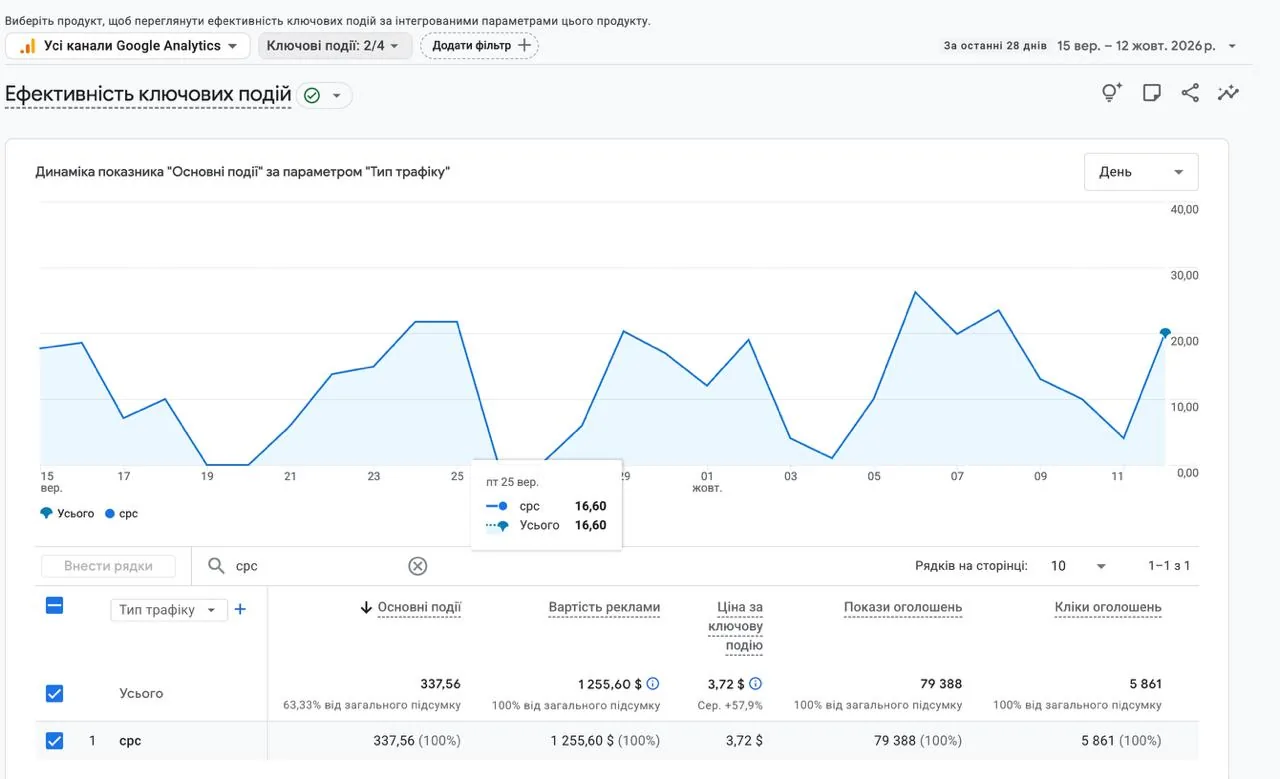
Over 28 days the ads brought in 337 calls, including unqualified ones.
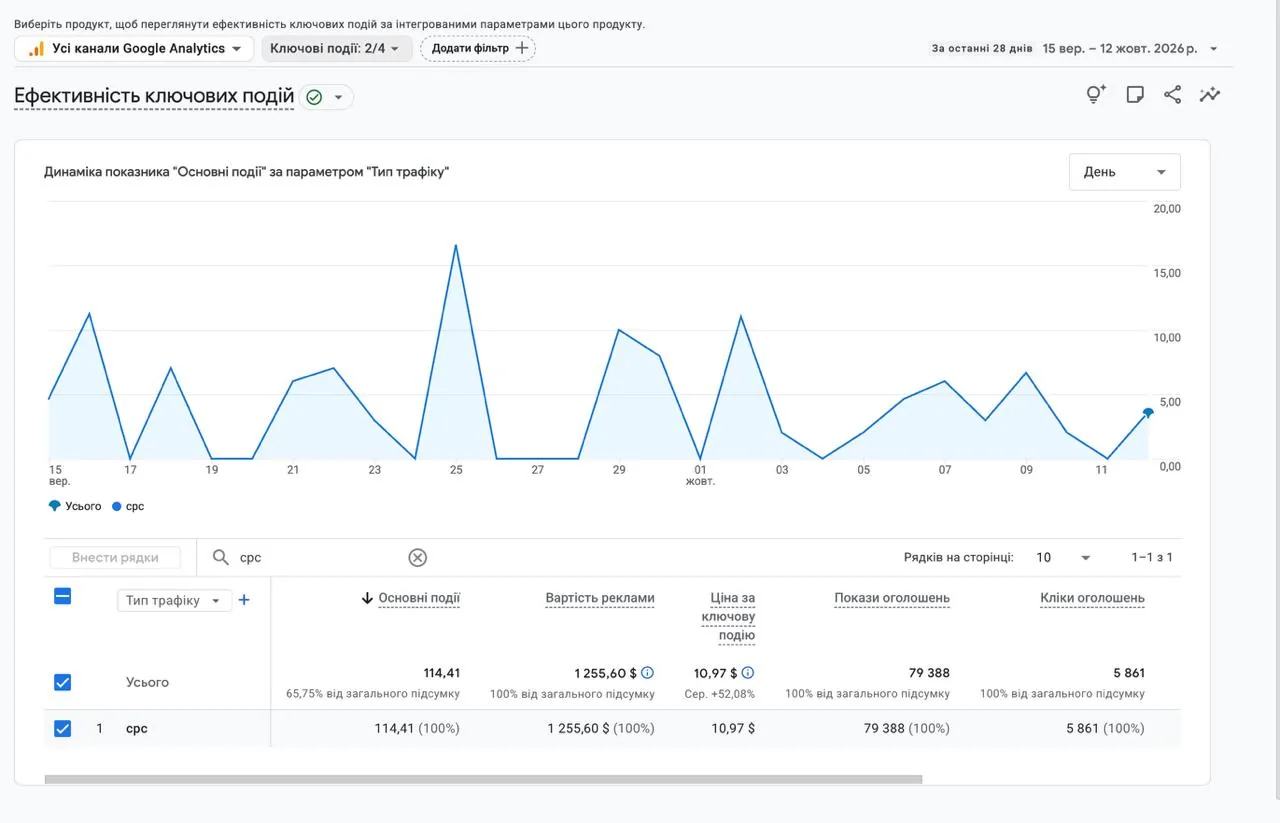
Of these, 114 were marked as qualified. That’s about a third.
A third is very low. Only Search campaigns run here. I can see every search term the ads show for, and they’re relevant. Yes, some people call about things that aren’t leads: to cancel a visit, to check the address. But two thirds of them? I don’t buy it.
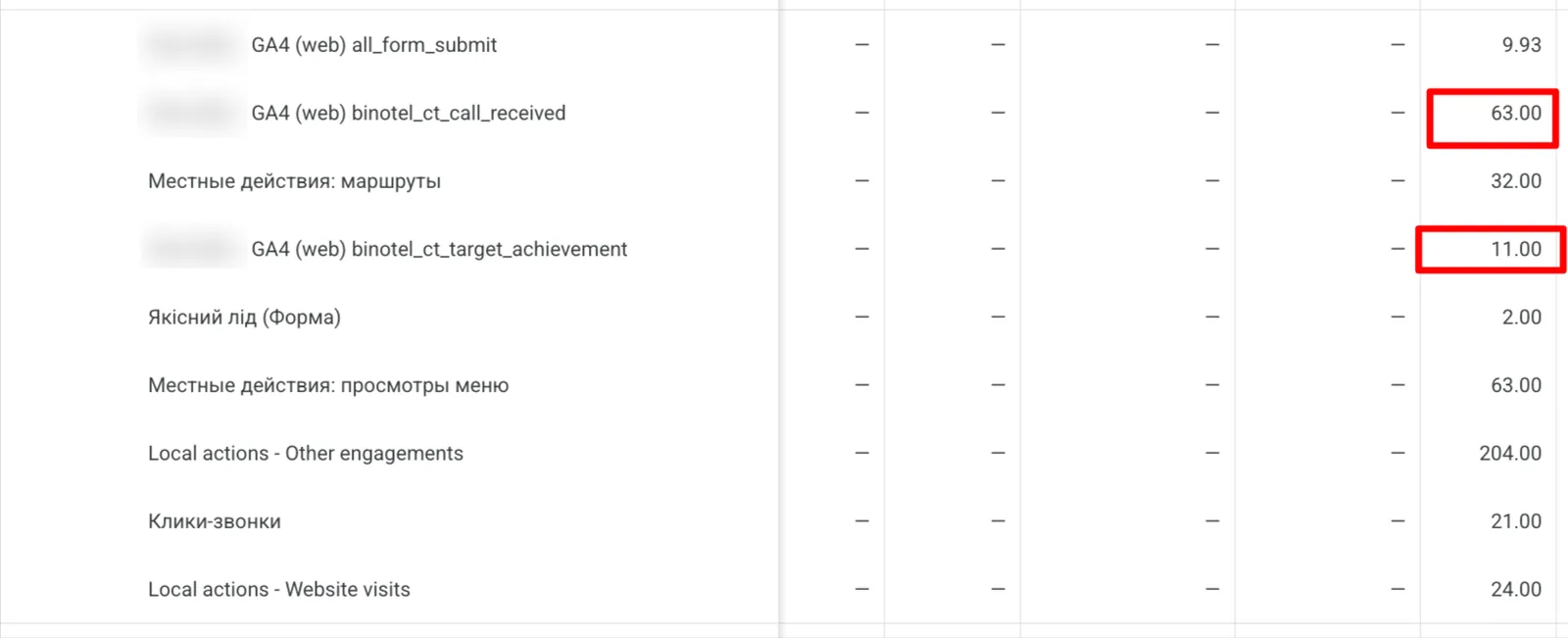
Some campaigns are even worse. Here’s one: 63 calls and only 11 qualified, i.e. 17%. That doesn’t happen. Or rather, it does — when nobody marks half the leads.
Another signal was on the end-to-end analytics charts.
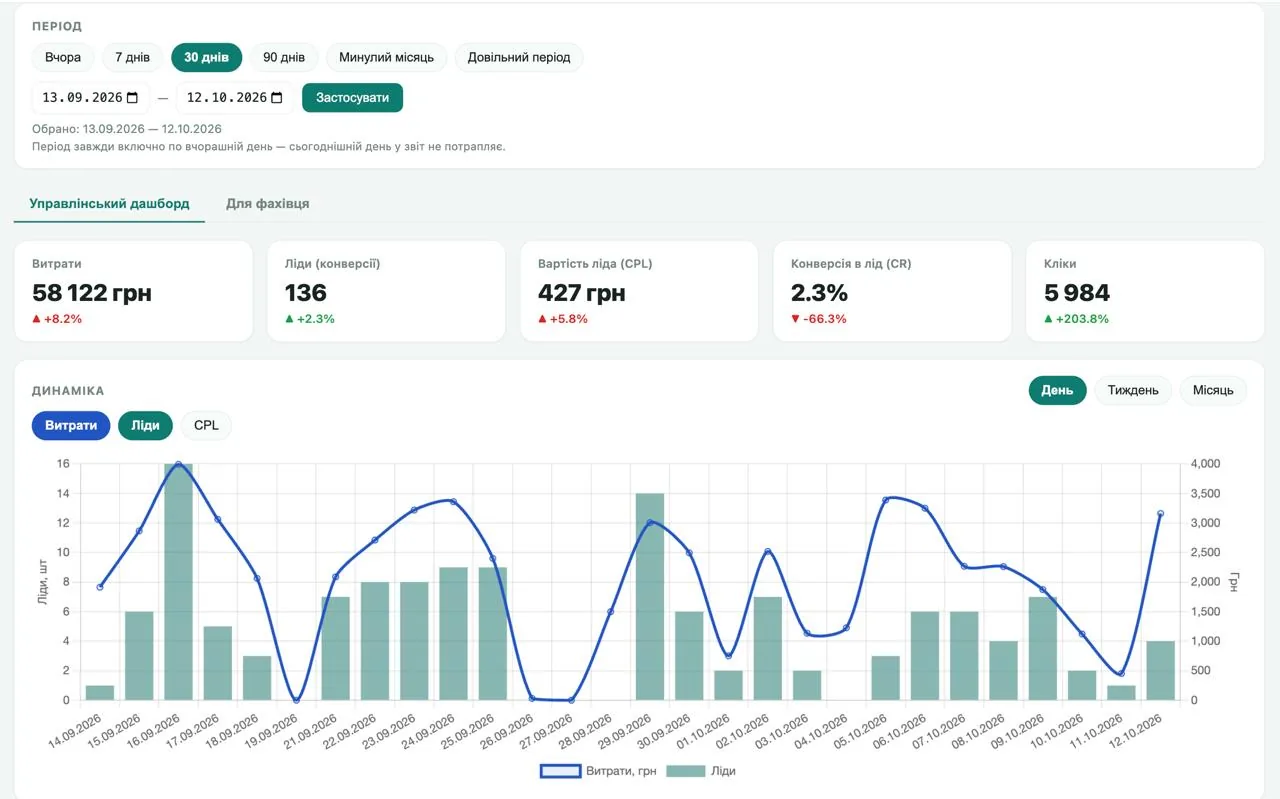
I understand leads don’t come in a straight line every day. But the swings here are too sharp. September 16 — 16 leads, two days later — 3. On September 28 the ads are running, there’s spend, and zero leads. The next day — 14. On October 4 there’s spend again and no leads. It looks like calls are marked not on the day they happened, but in batches, whenever someone gets around to it.
A shift of a day or two on its own won’t break the algorithm much. But it made me dig further. Getting nothing out of Search ads in a relevant niche for three months takes real talent. So the problem is definitely not the campaigns.
What I found in Binotel
I log into the client’s Binotel and take the last week, October 5 to 11.
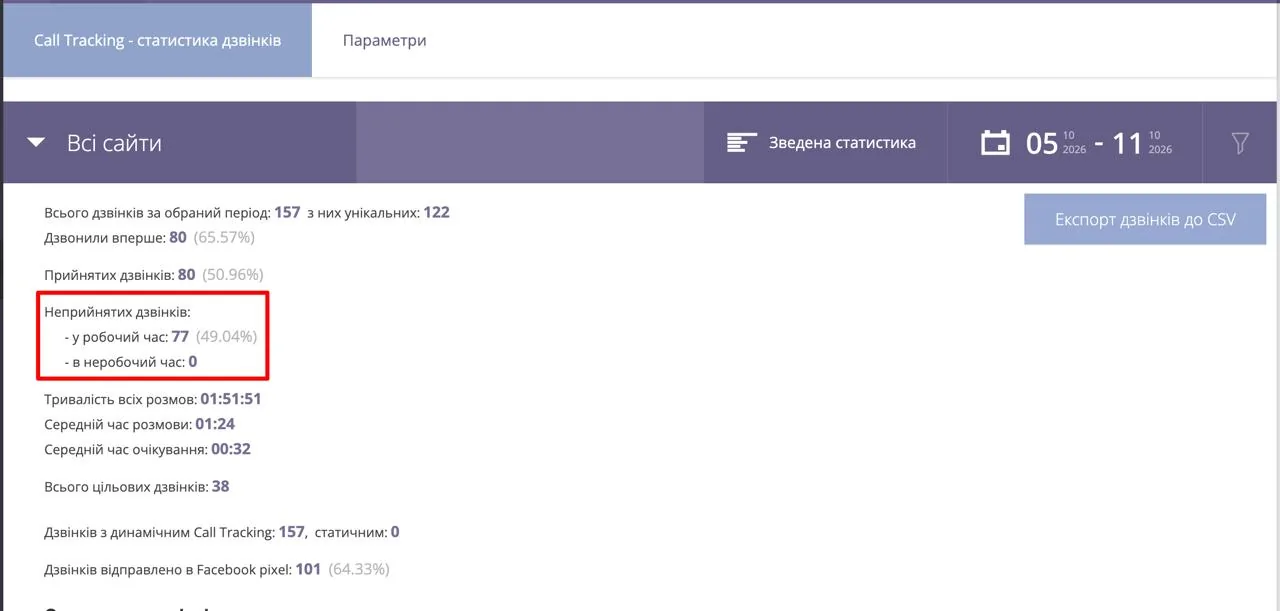
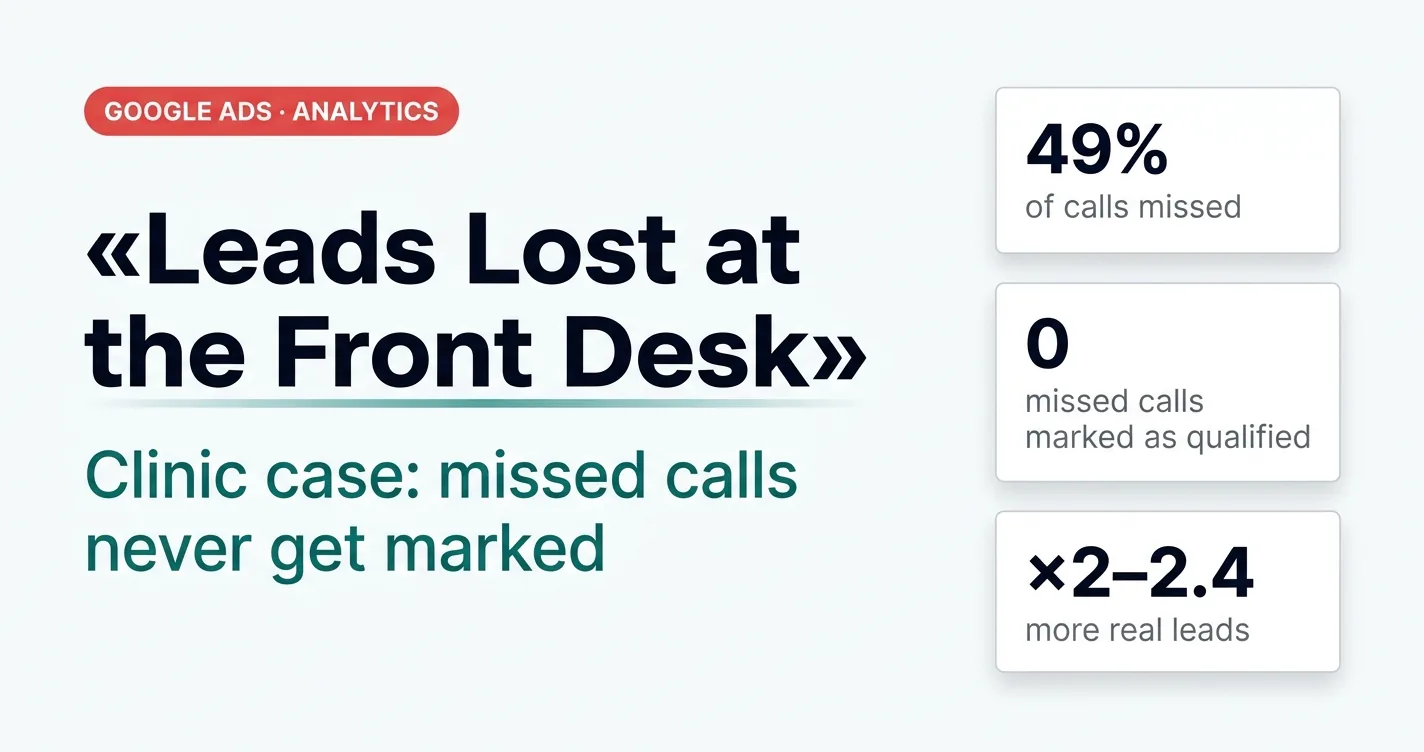
The first thing that jumps out: 157 calls, 77 of them missed during working hours. That’s 49%. Every second call went unanswered. The reasons are a separate question of business process organization — not the topic right now.
Here I only have dynamic call tracking connected, and I can’t see the whole telephony chain. So I started opening call cards.
And I found a pattern. I went through more than 20 missed calls, and not one of them was marked as qualified. Not one. Meanwhile, 70–80% of answered calls are qualified.
It can’t be that everyone who didn’t get through was unqualified. That doesn’t happen. A person who calls to book and can’t get through doesn’t stop being a lead.
So only answered calls get marked. Nobody marks missed ones. Were they called back? I hope so. But I no longer rule out the opposite.
How many leads there really are
It’s impossible to count precisely, because nobody marked the missed calls. But you can estimate.
Among answered calls, somewhere around 70–80% are qualified. Missed calls are roughly as many as answered ones. If the share of qualified calls among missed ones is the same, then over 28 days the real number of qualified calls isn’t 114 but roughly 235–270 out of 337.
So not a third, but 70–80%. That’s a completely different story, and it matches the fact that the ads run on relevant search terms. And there are 2–2.4× more qualified leads than Google Ads sees.
To be fair: some missed calls are repeat calls from the same people. Over the week there were 122 unique numbers out of 157. So this estimate is an upper bound, not an exact figure. But even if real qualified calls are not double but one and a half times higher, that’s already a completely different cost per lead.
 Analytics + Google AdsEnd-to-End Analytics: What Problems It Actually SolvesWhat end-to-end analytics really is and what real dashboards for lead gen, B2B and e-commerce look like.
Why this breaks the ads
The problem isn’t only the report, where the cost per lead comes out more than twice as high.
Google Ads learns from the conversions it receives. If more than half of qualified calls aren’t marked, the algorithm sees several times fewer results. It’s harder for it to learn, and it understands worse who the real customer is.
But something else is worse. A missed call never ends up as qualified. For the algorithm that’s a signal: the person called but didn’t become a customer. So the ads learn to avoid exactly those people who call when the front desk doesn’t pick up. And those may be the hottest leads.
And from the business side it all looks like this: ads are getting more expensive, there are few leads, so the contractor is to blame. You can change specialists, campaigns and strategies for years, and calls will keep getting lost at the phone.
Who should be monitoring this
I wouldn’t have seen this if I hadn’t dug into call tracking. And it’s definitely not my job to monitor how the front desk marks calls and whether they call back missed ones.
 MarketingWhy PPC Isn’t Working: The 5P Marketing Model for Business OwnersGoogle Ads is just one of five marketing elements. 5P explains where the business is responsible and where the specialist is.
On the business side there has to be a responsible person who keeps track of this. How many calls were missed? Were they called back? Are all qualified calls marked? That’s a question for management, not for the ads.
I’ve already sent the client a request and I’m waiting for a reply. And the conclusion is simple: friends, the problem isn’t always the ads. Sometimes it’s at the front desk.
To make Google Ads learn only from qualified calls — call tracking setup for Google Ads.
Where to find me
Message me on Telegram or by email — I respond quickly. Telegram channel and YouTube are for those who want to see real cases before reaching out and understand my approach.