
Marketer, analyst, ex-CMO focused on the Google ecosystem (Ads, Merchant Center, GA4, GTM). Google Partner. 150+ projects, 100+ positive reviews on Freelancehunt, 12+ countries.
- I work directly, with no account managers or subcontractors
- I measure results in sales, not in-platform conversions
- Maximum expertise in the Google ecosystem — instead of “PPC, social ads and SEO, all in one”
The most common complaint about Performance Max I hear at first meetings: “it wastes the budget on some kind of junk”. And mostly that’s true. You open the report and there are kids’ cartoons on YouTube, mobile games, tablets and leads from people who don’t pick up the phone.
Contents
But Performance Max isn’t broken. It does exactly what it was told, and where that’s cheapest for it. Below I break down what counts as junk, where it comes from, how to see it in reports and what to do about it. The article is for business owners, so there are minimal technical details. I covered the technical weak spots of PMax separately.
What Performance Max is in plain words
Performance Max (PMax) is a Google Ads campaign type where one campaign with one budget shows ads everywhere Google is at once: in Search, in Shopping (product ads with a photo and price), on YouTube, in the Display Network (banners on websites and in mobile apps), in Gmail, in recommendations (formerly Discover) and on Maps.
The main difference from regular campaigns: you don’t choose where to show. You provide products, texts, images, a budget and a goal. Then the algorithm decides on its own whom, where and for how much to show ads to get as many conversions as possible.
Sounds like a dream. The problem is in three words: “decides on its own”.
What I call “junk”
Junk is impressions, clicks and “conversions” you paid for that brought no sales and couldn’t have. Most often I see this:
- Kids’ YouTube. Cartoons, children’s songs, toy channels. A child won’t buy your sneakers or industrial equipment, but will happily tap the ad.
- Mobile games and apps. A banner pops up in the middle of a game, the person tries to close it and taps it instead. For Google that’s a click. For you it’s money spent.
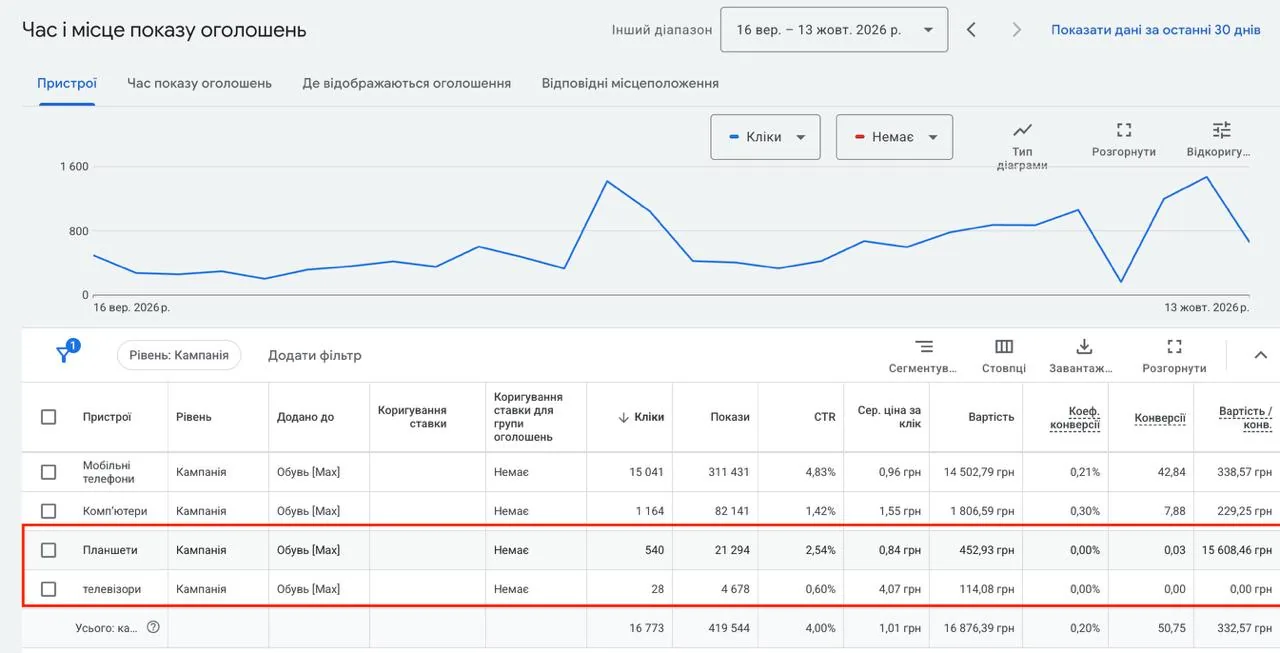
- Tablets and TVs. In the sneaker store audit, over 28 days tablets ate UAH 453 ($10) without a single purchase, TVs — UAH 114 ($2.5). A TV in PMax is pure YouTube anyway.
- Traffic outside the target location. You advertise in Kyiv, but the clicks come from Volyn region. You can’t see it in the account, but you can in analytics.
- Untargeted search queries. Instructions, “how to do it yourself”, job openings, competitor names.
- Fake leads and orders. Bots, non-existent numbers, “leads” that opened a messenger and wrote nothing.
An important caveat: YouTube itself isn’t junk. A separate YouTube campaign with decent videos and a clear task is a strong tool. Junk is YouTube that PMax went to on its own, with videos Google stitched together from your images. Same with Display: it works for remarketing, but as the main source of sales — almost never.
Why Performance Max goes there
It learns from what you called a conversion
Cause number one. I start every audit with it.
Performance Max looks for people similar to those who converted. If a click on the phone number, a “Contacts” page view or add to cart counts as a conversion in the account, the algorithm will look for people who click, not people who buy. And where is it cheapest to find people who click? Right: in mobile games and on kids’ YouTube.
What can count as a conversion at all, and what must never be let in, is in the article what a conversion in Google Ads is.
Two examples from my projects.
In the industrial heating equipment case, at the time of the audit PMax showed about a thousand leads a month in the account. In a very narrow B2B niche where that number is physically impossible. Real leads — zero. The ads ran mostly on YouTube, including kids’ channels.
The second is more recent and more painful. The project ran on offline conversions from the CRM, and PMax had been stable for three months. Then the client set up sending messenger leads without validation, and Google Ads started receiving “leads” who just opened a messenger and wrote nothing. Such people are much easier to find. Within two days the campaign broke, and PMax went wandering in Display. Three months of learning down the drain. How to properly send messenger orders is in a separate article.
Key takeaway: Performance Max can’t tell a sale from a click. It knows only what you passed to it. Garbage in, garbage out — only with your money.
Its job is to spend the budget
Google makes money when you spend money. So PMax will always find somewhere to put it. When there’s little hot demand in Search (a narrow niche, a small city, a seasonal slump), the rest of the budget goes where impressions are plentiful and cheap. That is, YouTube and Display.
So with limited demand, raising the budget often increases not sales, but the share of junk.
Images and videos open the doors
PMax with images, texts and videos in its asset group gets access to all channels. And if you have no video, Google will make one itself from your photos and texts. It always looks extremely shabby, and it runs precisely on YouTube.
Same with other “smart” features: automatically created assets, text customization, final URL expansion (Google chooses which page of your site to send people to, and it can be the blog or a careers page).
A target that’s too strict
If you set a target cost per action (Target CPA) lower than a lead really costs, the system won’t give up on it. It will start looking for cheap conversions. And cheap conversions live in the same places: Display and YouTube.
Audience signals aren’t targeting
Many people think that if they add their audience or search themes to PMax, the ads will go to exactly those people. No. It’s a hint for the algorithm to start from, and then it calmly goes beyond it. That’s why PMax campaigns named “Remarketing” and “Cold”, as in the audit of a lock store on Prom, are essentially two identical campaigns with different names.
Too little data
For smart bidding to work, a campaign needs at least 3–5 conversions a day. With fewer, the algorithm pokes around at random. And the cheapest place to poke around at random is Display.
How to see where the money goes
A few years ago PMax was a black box in the literal sense. Over the last year Google has opened it up noticeably, so you can see almost everything.
Performance Max 2026 Is No Longer a Black Box: New Google Ads Updates

Channel performance report. On the campaign’s statistics page. It shows how much money and how many conversions went to Search, Shopping, YouTube, Display, Gmail, recommendations and Maps. It’s the first thing I open in any PMax.
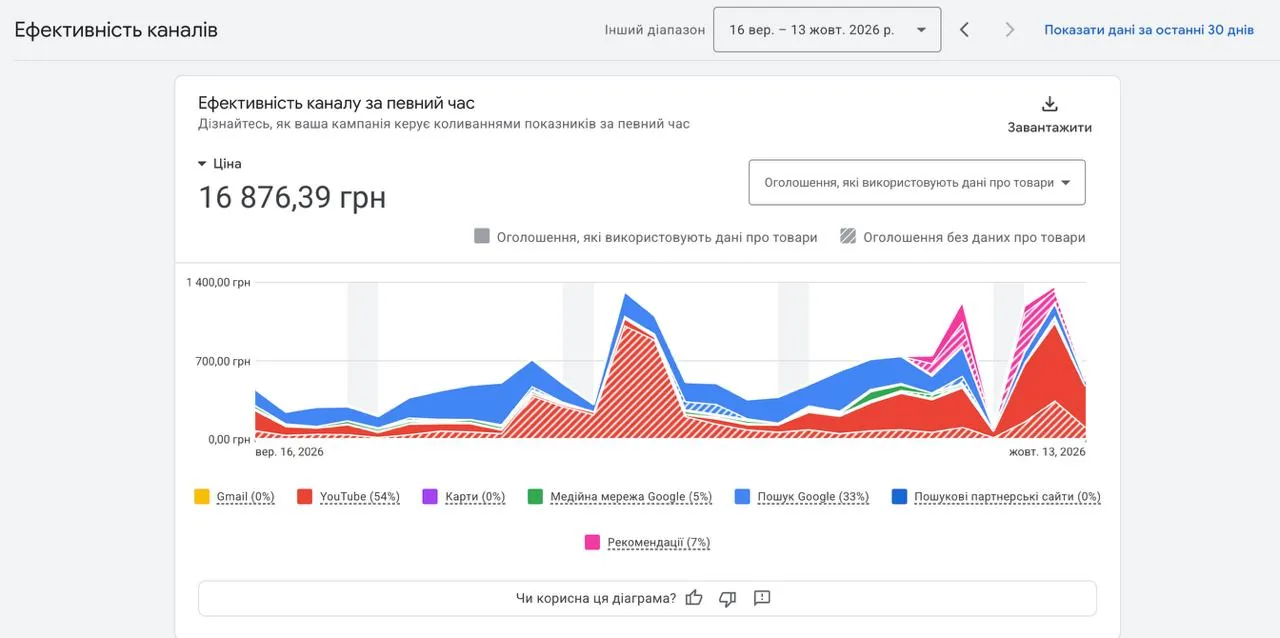
In the sneaker store audit, this report showed 54% of the budget on YouTube and only 33% on Search. In a mass-market niche with hot demand, where people search for a specific model and size.
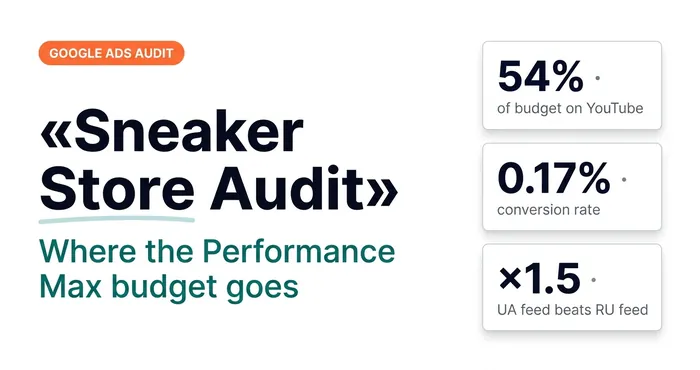 Google Ads audit · FootwearIndependent Google Ads Audit: Sneakers, YouTube and the Value That Wasn’t There0.17% conversion rate, YouTube eating 54% of budget, purchase value not passed and Target CPA choking the campaign. An audit of a footwear store.
Placements. This report now lives on the “When and where ads showed” tab. You can see specific sites, apps and YouTube channels there. There’s mostly no spend per placement, only impressions. But it’s enough to spot kids’ cartoons among your placements (places where the ad appeared).
Search terms. Which queries PMax showed for in Search and Shopping. This is where you catch instructions, “free”, competitors and everything else untargeted.
Devices and age. How much tablets and TVs ate, which age groups click and don’t buy.
GA4 for location. Traffic from outside your targeting isn’t visible in the account. It is visible in analytics: the regions report filtered to PMax traffic.
And the most important thing — the CRM. In the same sneaker store, according to the report YouTube brought 25 purchases and Search 23. It looks like YouTube works. But the client himself said that about half of orders don’t turn into a sale. How many of those 25 became real money, and how many were uncollected parcels and fakes, only the CRM knows. Without it, you evaluate channels on dirty data.
How to clean up the junk: my order of steps
The order matters. Starting with exclusions without fixing conversions is mopping the floor while the tap is still running.
1. Clean conversions. Only real sales or qualified leads are passed to Google Ads, preferably from the CRM. Not phone clicks, not the cart, not “opened a messenger”. For an online store — confirmed orders with the amount, better still with margin. For lead generation — leads the manager qualified as good.
05 — CRMCRM integration with Google AdsOffline conversions: real sales from your CRM flow back into Google Ads, so the algorithm learns from revenue, not leads.If there’s no CRM, that can be solved too: offline conversions without a CRM.
2. Feed Only for an online store. An asset group with products only, no images, texts or videos. This way PMax runs mostly in Shopping and climbs into YouTube and Display much less. There’s no full guarantee, but the difference is substantial. That’s what I did in the footwear store case.
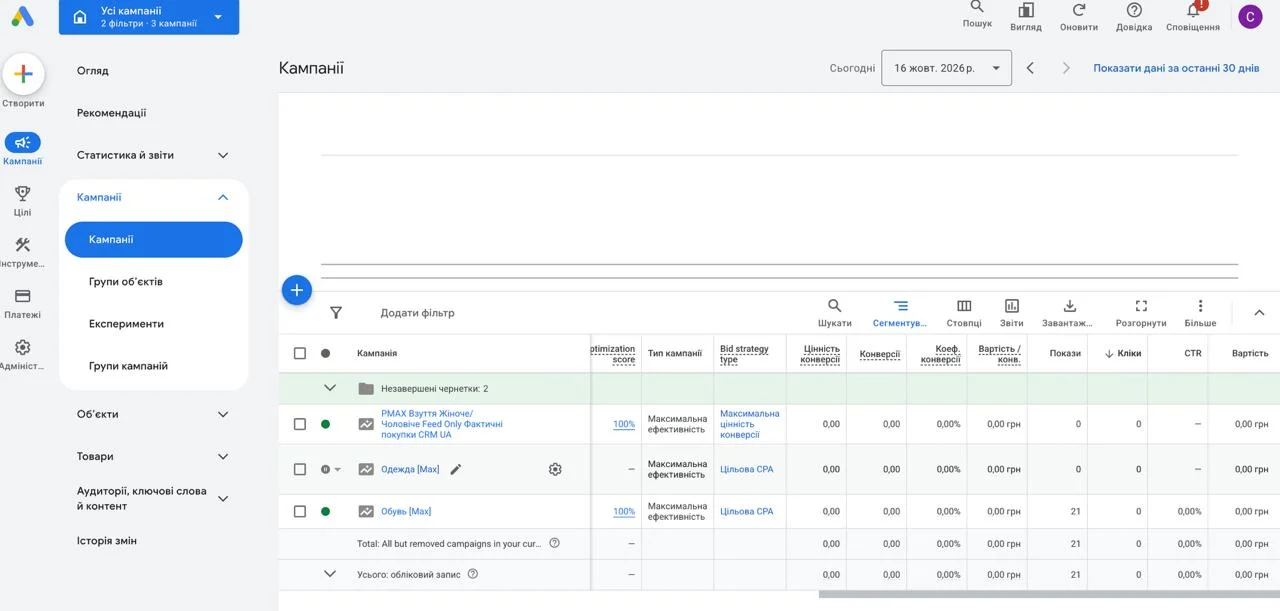
3. Turn off the automation that generates junk. Automatically created assets (including video), text customization, final URL expansion. I always turn them off at the start.

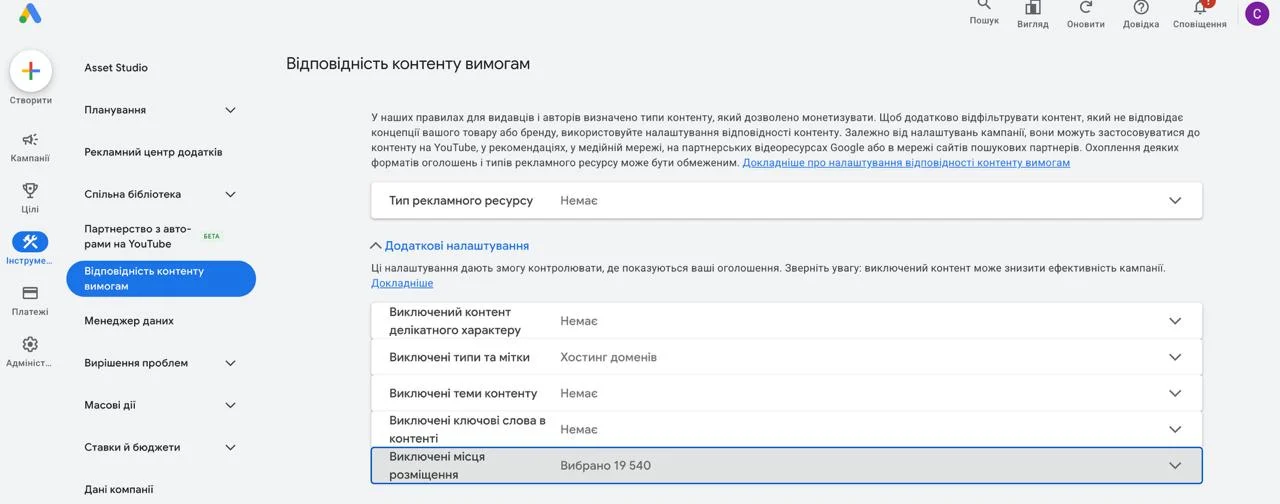
4. Placement exclusions. At the account level: kids’ YouTube channels, mobile apps, junk sites. Since January 2026 it’s one list for the whole account that applies to PMax as well as Demand Gen, YouTube and Display. In the same footwear store this list has 19,540 entries, mostly kids’ channels.
5. Devices. Tablets and TVs don’t sell — turn them off. PMax finally allows it.
6. Age. If an age group brings a tiny share of sales with noticeable spend, you can exclude it at the campaign level. I make the decision based on CRM sales, not clicks.
7. Negative keywords and brand. PMax now has campaign-level negative keywords, up to 10,000. Untargeted queries are excluded the same way as in Search. I remove branded queries from PMax and give them to a separate Search campaign, otherwise PMax paints itself a ROAS on people who were looking for you anyway. There’ll be a separate article on negative keywords.
Unlimited Negative Keywords in Performance Max? Testing 400+ Keywords

8. Location and language. In location settings — only people who are in or regularly in the region, not those “interested” in it. Language — only the one your customers speak. In the furniture store audit the campaigns were set to all languages. In another project, on a Polish website, 10% of the budget went to users with English set as their language this way. Return — zero.
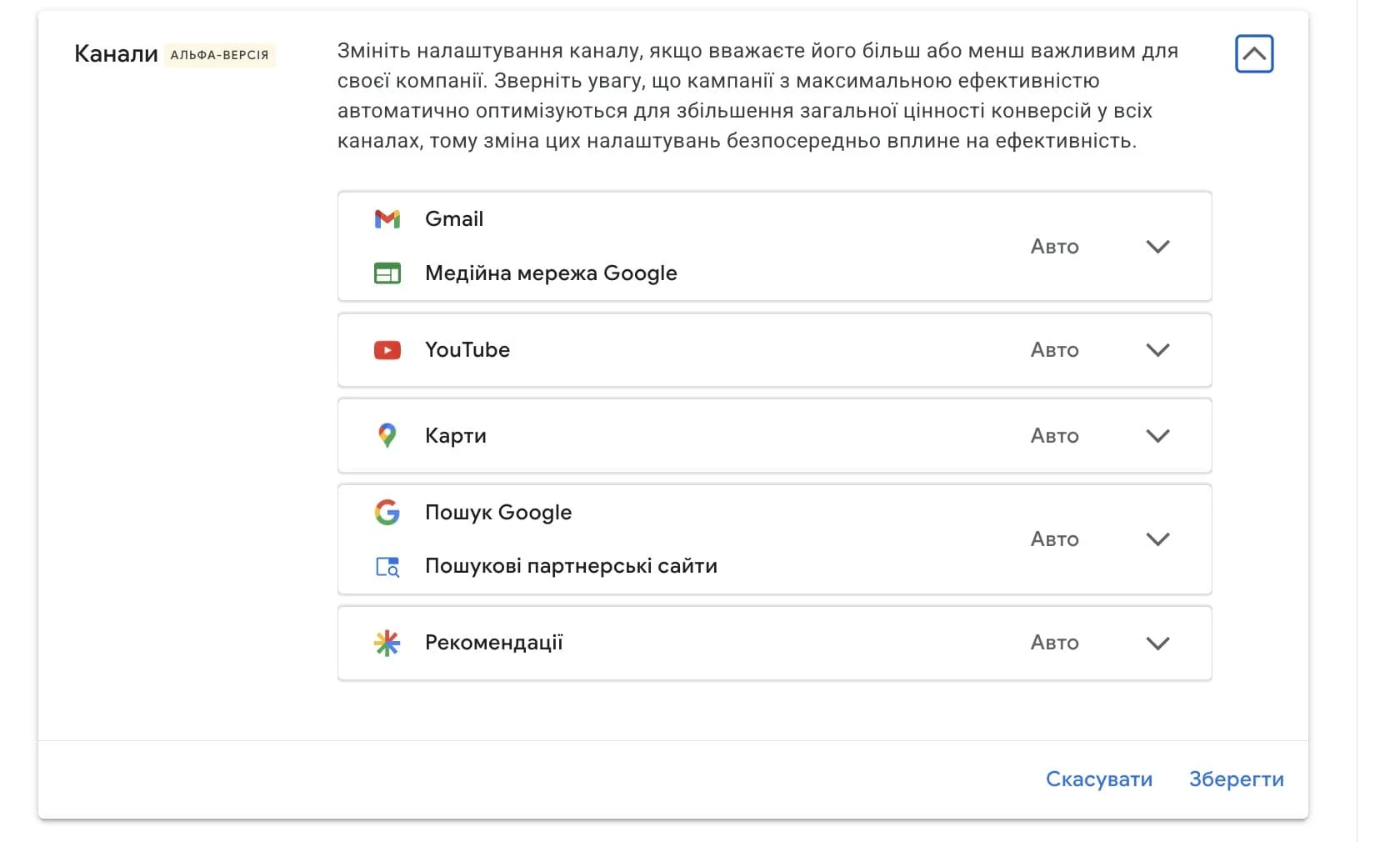
9. Channels, if Google gives you that control. Some accounts now have channel influence adjustment — down to −50% for YouTube or Display. I showed how it works in the article about the new Performance Max feature. Since July 2026 Google has also been testing checkboxes that fully turn off Display and search partners in PMax. For now it’s an alpha test not available to everyone. Check your settings.
10. A realistic target. Target CPA or Target ROAS are calculated from the business’s economics, not from wishes. For example, in the ROI calculator. An understated cost per lead pushes PMax into cheap traffic.
And a caveat. Don’t cut everything in one day. Every exclusion narrows the space for the algorithm, and aggressive edits in the first week easily break learning. First conversions, then the obvious junk (kids’ channels, TVs), then — based on a few weeks of data.
When you don’t need Performance Max
Sometimes the best way to clean junk out of PMax is not to run PMax.
- Lead generation without CRM data. PMax will find cheap leads. Nobody among them will buy.
- A narrow B2B niche. Not enough statistics, the algorithm has nothing to learn from.
- A small budget. Fewer than 3–5 conversions a day per campaign — and PMax behaves chaotically.
In such cases I start with Search or standard Shopping, where there’s more control. An example where PMax was deliberately dropped is the instant camera store with a 1669% ROAS. How to choose a campaign type for your task is in the article “Search, Performance Max, YouTube, Display or Shopping”.
Conclusion
Performance Max doesn’t waste your budget out of malice. It spends money where it’s cheapest to get what you called the result. Called a click the result — you’ll get clicks from mobile games. Pass real sales — it will look for buyers.
So cleaning up junk in PMax starts with conversions. Feed Only, exclusions, devices, age and negative keywords are the second step. And it only works once the first one is done.
18 — Google AdsPerformance Max and Shopping setupPerformance Max and Shopping campaigns for online stores: Merchant Center, feed, purchase tracking and a structure built around margin.
Where to find me
Message me on Telegram or by email — I respond quickly. Telegram channel and YouTube are for those who want to see real cases before reaching out and understand my approach.