
Marketer, analyst, ex-CMO focused on the Google ecosystem (Ads, Merchant Center, GA4, GTM). Google Partner. 150+ projects, 100+ positive reviews on Freelancehunt, 12+ countries.
- I work directly, with no account managers or subcontractors
- I measure results in sales, not in-platform conversions
- Maximum expertise in the Google ecosystem — instead of “PPC, social ads and SEO, all in one”
I’m so tired of explaining every time why you should target your own brand that I decided to write a separate short article about it.
A brand campaign in search advertising is there to protect your brand from competitors. If you think people search for you deliberately and will definitely find you, or that your SEO is so strong you show up above competitors’ ads targeting your brand, you’re badly mistaken.
Contents
Branded searches are your most valuable customers
People who search for you by name are your most valuable customers. Not necessarily repeat buyers. They may be new people who saw you, for example, in a Meta or ChatGPT ad and are now looking you up on Google by name.
The person already knows who they’re looking for and is ready to buy. Handing that search to a competitor means losing a customer you may have already paid for with ads in another channel.
Users don’t pay attention
If you think all users carefully check whether they’ve landed in the right place — no. They just click the first link.
I have pizza delivery cases where ads show on a competitor’s brand, whether through a Search campaign or Performance Max. People place an order thinking they ordered from one restaurant, while they actually ordered from another. That can turn into either a new customer or a bad experience. And it’s not only about potential revenue — you’re losing your own customers.
It’s especially dangerous when brand names sound alike or are spelled the same.
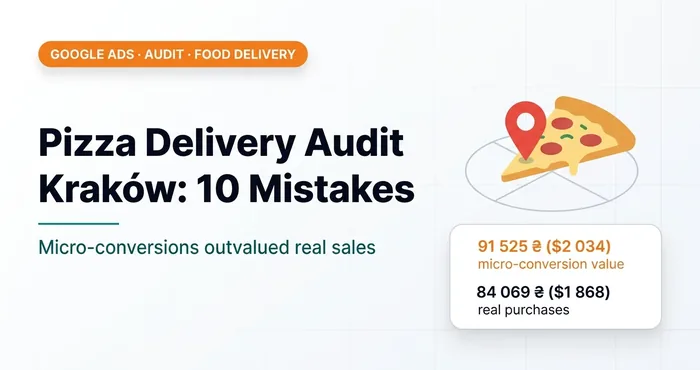 Google Ads audit · Food deliveryIndependent Google Ads audit: pizza delivery in Kraków — 10 mistakes in the accountIndependent Google Ads audit of a Kraków pizza delivery: micro-conversions, a 10 km radius, mixed brand and non-brand. 10 mistakes and what to fix.
Who intercepts your branded searches
Competitors intercepting your branded searches is a fact. They often do it without even meaning to, for example through those same Performance Max campaigns that hunt for high-converting searches on their own.
There’s also a deliberate strategy: a competitor targets your brand on purpose. The audience there is supposedly hotter than on generic searches. But people forget one nuance: the person is looking for a specific brand. Not you, and not even a specific service or product.
In over 7 years of working with Google Ads I’ve hardly seen any successful cases of targeting someone else’s brand.
When targeting competitors’ brands makes sense
There are two such cases.
Aggressive scaling or capturing the market. When the potential of generic searches is exhausted and you’re deliberately going after market share. If your budget is 500 UAH ($11) a day, you need to focus as narrowly as possible, not go where the conversion rate is always lower.
A stronger offer. If your offer really is better than the competitor’s and you can show it in the ad. Real advantages, not “delivery by Nova Poshta across Ukraine”. Without meaningful advantages, targeting someone else’s brand is money down the drain.
Protect your brand
A brand campaign isn’t only about revenue, it’s also about potential losses. Don’t idealize your audience: nobody will sit and work out whether they landed in the right place.
Keep the brand campaign separate from generic ones. Branded searches are cheaper and convert better, and mixed with generic ones they pull down the average cost per lead. Separately, you can see how much a new customer really costs.
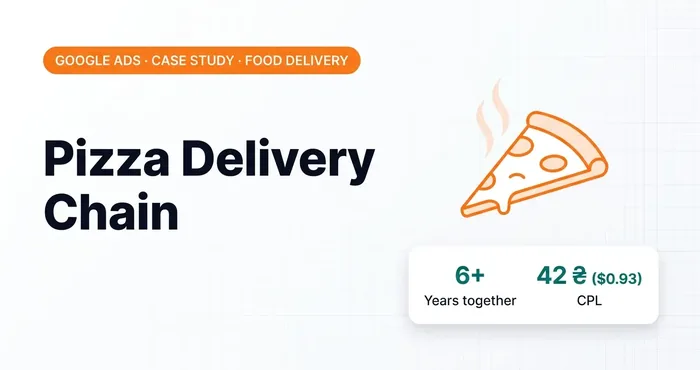 Google Ads case study · Food deliveryFood delivery Google Ads case study | Local business | CPL 42 UAH ($0.93)6+ years with a pizza delivery chain: CPL 41.26 UAH ($0.92) across all campaigns, 174 UAH ($3.9) without brand. How case study numbers get manipulated.
Where to start
Search Google for your brand name, ideally from a phone and from different cities if you operate in more than one. If a competitor’s ad sits above your site, some of your customers are already going to them. Then check whether your account has a separate brand campaign. If not, that’s exactly where to start.
Where to find me
Message me on Telegram or by email — I respond quickly. Telegram channel and YouTube are for those who want to see real cases before reaching out and understand my approach.