
Marketer, analyst, ex-CMO focused on the Google ecosystem (Ads, Merchant Center, GA4, GTM). Google Partner. 150+ projects, 100+ positive reviews on Freelancehunt, 12+ countries.
- I work directly, with no account managers or subcontractors
- I measure results in sales, not in-platform conversions
- Maximum expertise in the Google ecosystem — instead of “PPC, social ads and SEO, all in one”
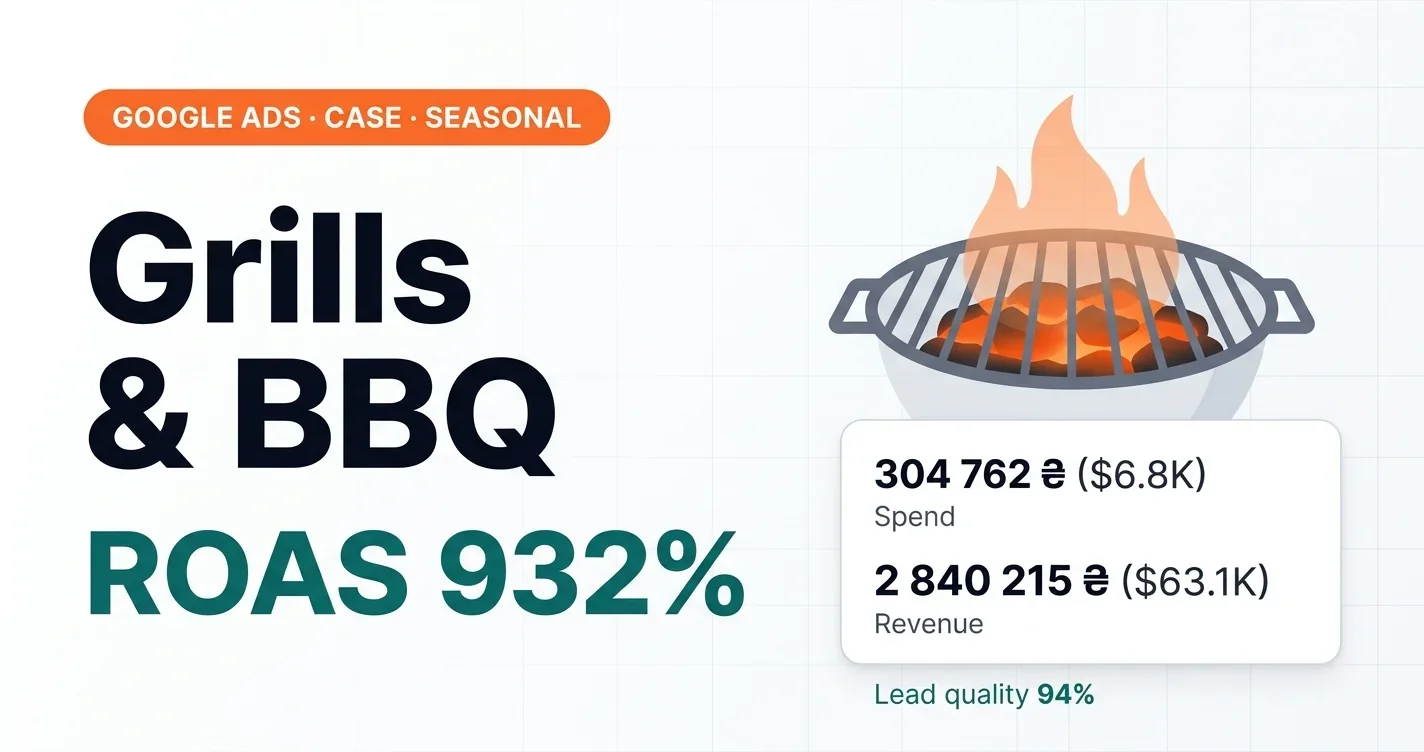
Niche: premium grill and BBQ manufacturer. Platform: OpenCart, SalesDrive CRM.
Contents
A bit of background
I have already worked two full seasons with this client. He came last year after an audit — he was not happy with the previous contractor’s results. I ran the audit and showed the real problems and why they mattered, not just a list of remarks for the sake of it. The client agreed with the conclusions, and we started working.
The first season was profitable, but I would not call it outstanding. We joined in the middle of the season and had to rebuild the structure almost from scratch. Most importantly, during that season I tested different campaign formats and gathered data.
We did not stop after the season ended. Demand for BBQs is minimal from November to February — that is obvious. But I did not switch the ads off; I moved to a minimal budget and worked on building demand and brand awareness, so that when the season opened people would already know where to go.
This approach paid off in 2026.
What I prepared for the season
The website was completely rebuilt. A new design and the fixes I had recommended to the client during the previous season. Six months of off-season is time to work on the product, not to pause.
Product ratings in Google Merchant Center. I connected the program, so stars with reviews appear right in the Shopping ads. It is a free Google feature, but most competitors do not use it. OpenCart has free plugins for building a review feed — not using this potential would be a crime.
End-to-end analytics with CRM. Real orders from SalesDrive are sent back to Google Ads. The algorithm optimizes not for clicks or add-to-carts, but for confirmed orders with real amounts.
About the product and audience
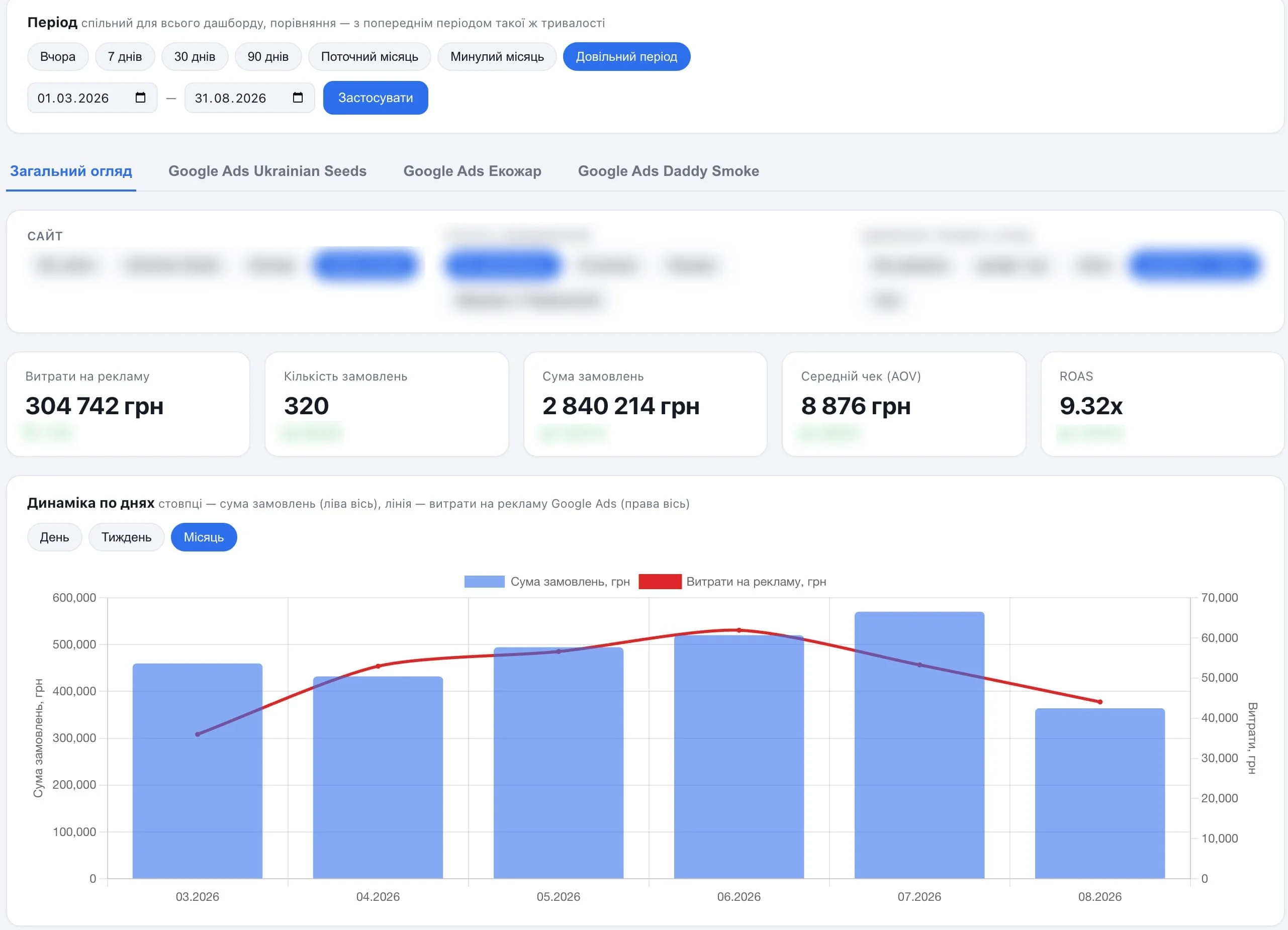
These are not cheap BBQs for 1,500 UAH ($33). An average BBQ here costs from 10,000 UAH ($222), and the average order across the account is 8,876 UAH ($197). The audience is upper-middle income and above. This matters for the ad strategy: you cannot just “pour traffic” here — you need to reach a specific audience with a specific message.
The niche is very competitive — in the premium segment and especially in the cheaper one, where there are plenty of offers. But I found our audience and communicate with it clearly.
Season results (03/01 — 08/31/2026)
94% lead quality is one of the best results across all the projects I work on. Out of 320 orders, only 20 were rejected. This shows the ads reach the right audience. There are no random visitors looking for a 1,500 UAH ($33) BBQ and surprised that it costs more here.
Seasonality is not a problem but a tool
If you do not understand your product’s seasonality, you will burn budget in the off-season and underearn in season.
Look at the chart: March is the start of the season, and a good start right away because the brand is already known to the target audience after the winter work. April–July is the peak. August already shows a noticeable decline, and the budget is reduced accordingly.
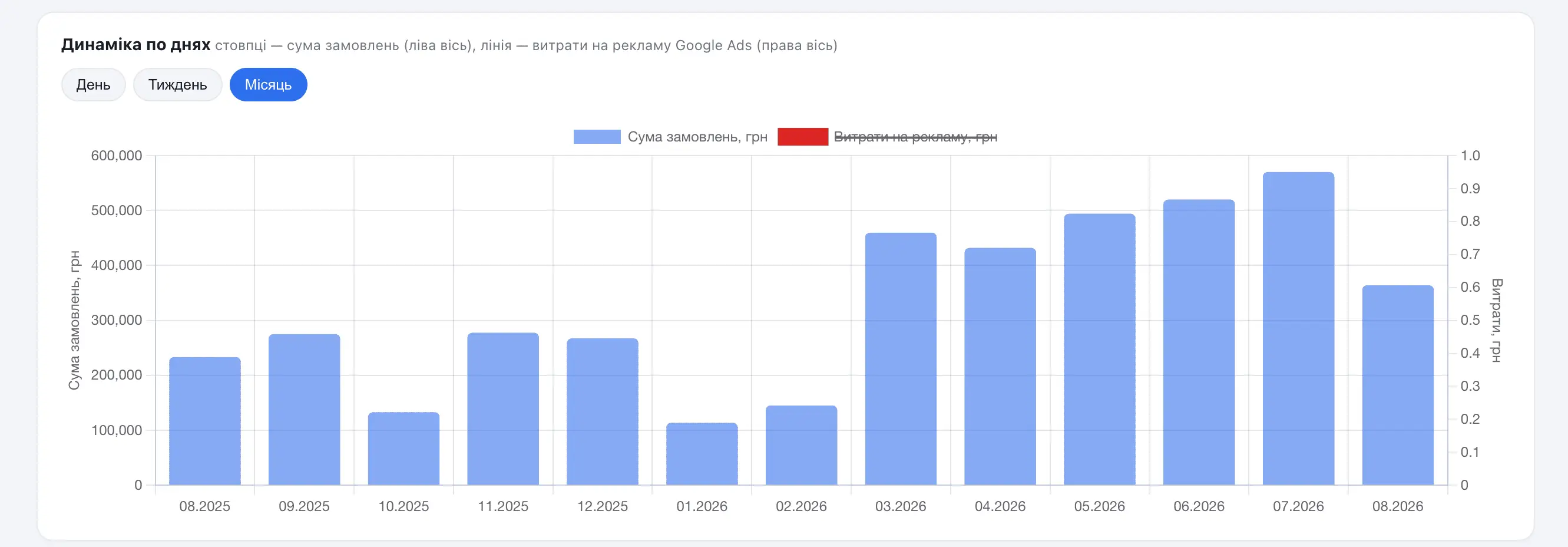
Now that the season is winding down, I am starting to test new formats for the off-season. The goal is to build demand and trust in the brand so the next season opens even stronger than this one.
I am now applying the same approach — starting work before the season, not during it — to another client project selling heating stoves. I launched the ads at the end of June. The stove season is still far away, but the results are already good, because demand is built in advance.
About the client’s openness
This case is anonymized out of respect for the client’s confidentiality and given how competitive the niche is. You see only part of the picture.
But there is one thing I want to stress: results like these are only possible when the client is open — open to sharing real CRM data, open to website changes, open to testing new formats. If I cannot see real data, I cannot optimize ads properly. It is not a question of trust; it is a question of being physically able to work effectively.
Clients who hide their numbers are not my clients, because without the full picture I cannot guarantee results.
Conclusion
This case is about consistency. Not about a magic setup that delivered 932% ROAS in one month, but about two seasons of work, the right off-season strategy, end-to-end analytics, constant work on traffic quality and a client open to change.
The client makes money, I make money. That is exactly how it should work.
Where to find me
Message me on Telegram or by email — I respond quickly. Telegram channel and YouTube are for those who want to see real cases before reaching out and understand my approach.