
Marketer, analyst, ex-CMO focused on the Google ecosystem (Ads, Merchant Center, GA4, GTM). Google Partner. 150+ projects, 100+ positive reviews on Freelancehunt, 12+ countries.
- I work directly, with no account managers or subcontractors
- I measure results in sales, not in-platform conversions
- Maximum expertise in the Google ecosystem
Contextual advertising is advertising shown to a person in the context of what they are searching for or reading right now. You type “air conditioner repair kyiv” into Google and see ads from companies that repair air conditioners in Kyiv above the search results. That is contextual advertising.
I’ve been doing it for more than 7 years and have launched over 150 Google Ads projects. Below, in plain words: how it works, what you pay for, how it differs from targeted advertising and when it won’t help.
Contents
How contextual advertising works
The main idea: the ad is shown in response to interest the person showed themselves. You don’t interrupt them — they came with a specific question, and your ad is one of the answers.
In Ukraine, as in most countries, contextual advertising mainly means Google Ads. It comes in several kinds:
| Kind | Where it shows | What it reacts to |
|---|---|---|
| Search | above and below Google search results | the query the person typed |
| Shopping | product ads with a photo and price | a query about a product |
| Display | banners on sites and in apps | the page topic and the person’s interests |
| Video | YouTube | interests, topics, YouTube search |
| Performance Max | all Google placements together | the algorithm decides itself |
In the narrow sense, “contextual” often means search ads specifically. Which type to choose for your business — in detail in the article Search, Performance Max, YouTube, Display or Shopping.
What you pay for
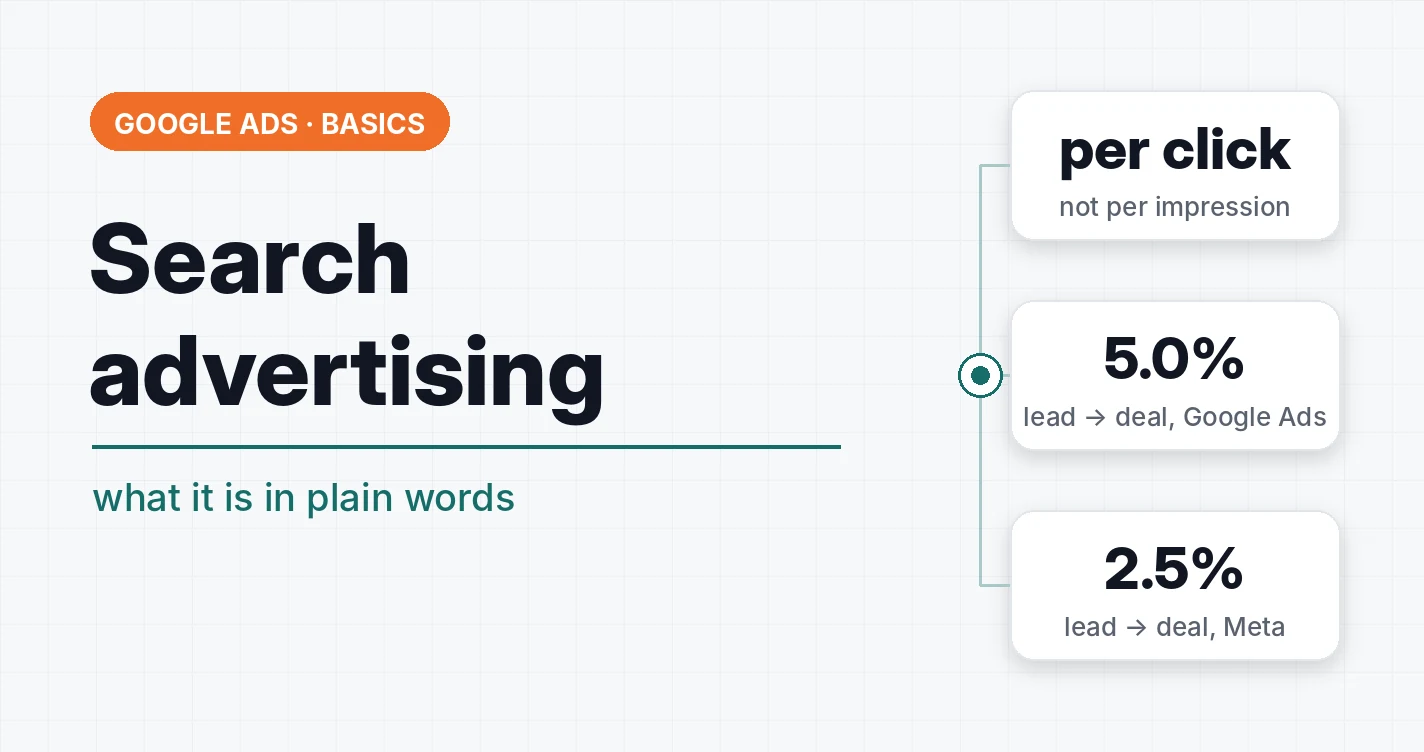
In search ads you pay per click, not per impression. 1,000 people saw the ad, 50 clicked — you paid for 50 clicks.
The cost per click isn’t fixed. It is set in an auction every time someone types a query: how many advertisers want to show, what their bids are, how relevant the ads and the site are. The difference between niches is huge. According to Keyword Planner for Ukraine, the average top-of-page bid for “sushi kyiv” is 20.94 UAH ($0.47), for “air conditioner repair” 50.78 UAH ($1.13). And in a real campaign for legal services under article 130 of the Code of Administrative Offences the average CPC was 255.58 UAH ($5.68), although Keyword Planner showed up to 25 UAH ($0.56).
How the cost per click is formed and why it grows — in the article CPC: what the cost per click depends on.
How contextual advertising differs from targeted ads
This is the most common question from people who are just starting. The difference is fundamental.
Contextual advertising captures existing demand. The person is looking for your product or service themselves. They already know what they want and are choosing who to buy from.
Targeted advertising creates demand. Ads on Instagram, Facebook or TikTok are shown to people by interests, age and behaviour. They interrupt the person in their feed while they’re watching memes and short videos. The person wasn’t planning to buy right now.
| Contextual (Google Ads) | Targeted (Meta, TikTok) | |
|---|---|---|
| Who sees the ad | someone who is searching | someone who fits by interests |
| Demand | captures existing | creates new |
| Funnel stage | bottom, ready to buy | top and middle |
| Ideal for | products and services people search for | new products, impulse buys, awareness |
On real numbers the difference looks like this. On a project with 9,171 leads over eight months, Meta Ads brought the most quality leads, yet they converted into deals the worst: 2.5% versus 5.0% for Google Ads. A deal from Meta cost 21,936 UAH ($487), from Google Ads 9,869 UAH ($219). That doesn’t mean Meta is bad. They are different tools with different roles.
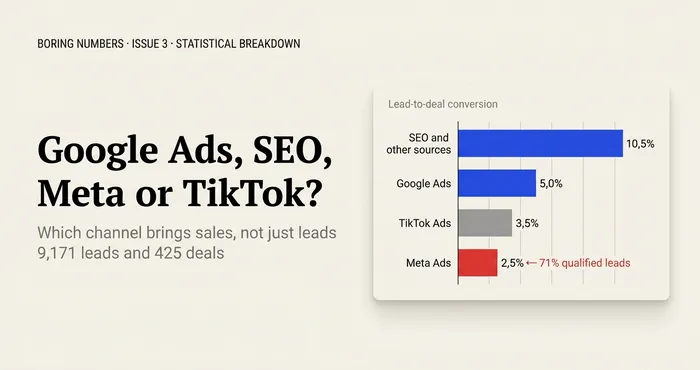 Analytics · MarketingWhich Is Better: Google Ads, SEO, Meta or TikTok Ads? A Breakdown of 9,171 Leads and 425 DealsA breakdown of 9,171 leads and 425 deals: which channel brings sales, not just leads, what a deal costs in Google Ads, Meta and TikTok, and where to start.
Who contextual advertising suits
- There is demand. People already search for your product or service on Google. If there are a few searches a month, search ads will bring a few clients, and that’s the ceiling.
- You need results fast. The first clicks come on launch day.
- Local businesses and services. Repairs, delivery, clinics, lawyers — people search for “near me” and “now”.
- Online stores. Especially with Shopping ads, where the person sees the photo and price before clicking.
When contextual advertising won’t work
Advertising brings a person to the site. The business does the selling: price, site, terms, how fast the manager replies. If any of that doesn’t work, no setup will save it.
The most common reasons:
- No demand. A new product nobody is searching for. Here you need targeted ads, YouTube, PR.
- Uncompetitive price or offer. The person compares you with three competitors in 30 seconds.
- The site doesn’t convert. Slow, confusing, with a 10-field form.
- The economics don’t add up. A click costs more than you earn from one client.
Why ads don’t work even when set up correctly — I covered that through the 5P marketing model.
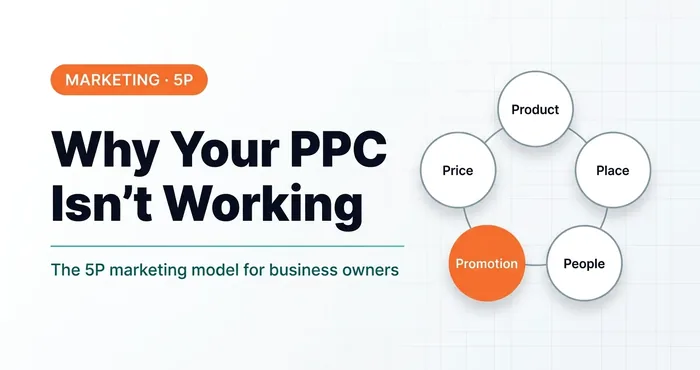 MarketingWhy PPC Isn't Working: The 5P Marketing Model for Business OwnersGoogle Ads is just one of five marketing elements. 5P explains where the business is responsible and where the specialist is.
Key point: contextual advertising doesn’t create demand. It brings people who are already searching, and from that moment everything depends on what they see on your site.
How much budget you need
There is no universal figure. It depends on the cost per click in your niche, the site’s conversion rate and how many leads you need. The logic is simple: how many clicks it takes to get one client and how much those clicks will cost.
You can calculate this before launch in the Google Ads payback calculator. And what you can realistically do with a small budget — in the article is $10, $50 or $100 a day enough.
A first step that costs nothing: type 3–5 queries your clients use to search for your service into Google. See who is advertising, what they offer and at what price. If there are no ads at all, either there is no demand or you’ve found a niche nobody has taken yet.
Where to find me
Message me on Telegram or by email — I respond quickly. Telegram channel and YouTube are for those who want to see real cases before reaching out and understand my approach.